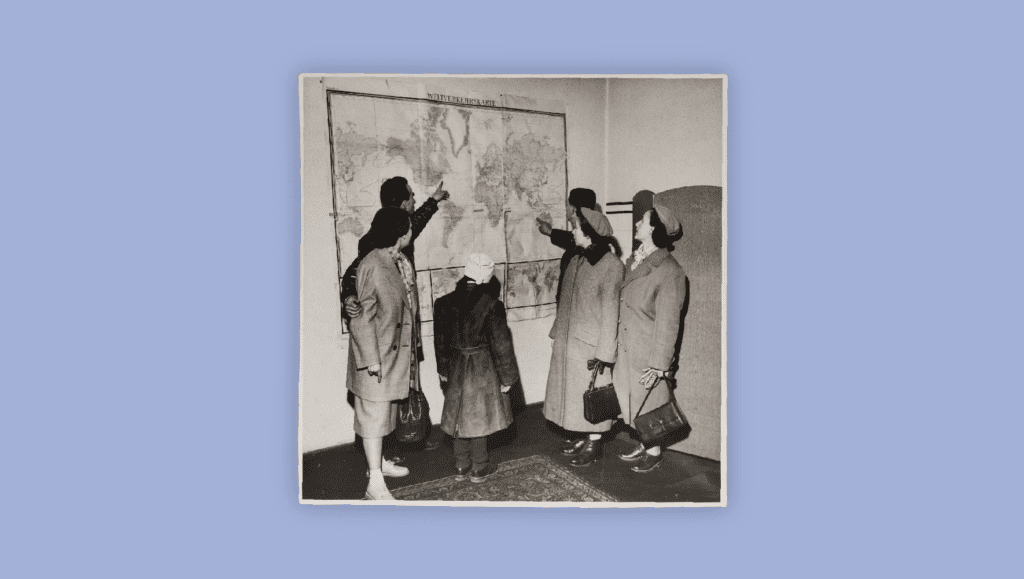
The Lautenberg Amendment, first enacted in 1990 to facilitate the resettlement of Jews from the former Soviet Union, has allowed HIAS to bring tens of thousands of refugees to safety. As the worldwide refugee situation changed, the Lautenberg Amendment, originally introduced by Senator Frank R. Lautenberg, was later expanded to include persecuted religious minorities, such as Jews, Christians, Baha’is, Sabaean-Mandaeans, and Zoroastrians from Iran. Despite being a crucial part of U.S. refugee policy, the amendment expires each year and must be reauthorized and extended by the U.S. Congress. Since its introduction in 1989, the program has been reauthorized and extended every year and must be again for Fiscal Year (FY) 2027 (beginning October 1, 2026).
Even though the Trump administration has halted Lautenberg processing and admissions, it is still essential for Congress to continue to reauthorize and extend the program to make it very clear that Congress still expects the program to function and to ensure that if the administration restarts the program, local resettlement agencies can accept new applications. For example, because the program was reauthorized and extended for FY26, new applications can still be filed for when the program becomes operational again. The Lautenberg Amendment was reauthorized by Congress for FY 2026 and it expires on September 30, 2026.
This program allows certain individuals legally residing in the United States to apply to bring eligible family members and friends to the U.S. To access the program, qualifying individuals who legally reside in the U.S. must apply for family members and friends through a resettlement agency in their area; applications will only be considered if they come through a local resettlement office. The submission of an application does not guarantee refugee processing or admission to the U.S. Applications submitted do not meet the criteria for special humanitarian concern for admission to the U.S. as a refugee in FY 2026. However, the Department of State will record the date of the application if the named beneficiaries are identified as being of special humanitarian concern to the U.S. in a subsequent fiscal year.
Information for Applicants from the Former Soviet Union (FSU)
Applicants from the former Soviet Union must have a close family member in the U.S. with permanent immigration status to apply for refugee status through the Lautenberg program. Close relatives (parents, children, spouses, siblings and grandparents) of qualified applicants will be able to initiate their refugee applications by filing an Affidavit of Relationship (AOR) through a local resettlement office.
Please be aware that HIAS does not provide consultations on general immigration questions or on immigration options to the U.S. HIAS cannot assist in obtaining tourist or work visas. If you still have questions, please view our Frequently Asked Questions or contact info@hias.org.
President Trump Halts Refugee Pathway
The U.S. Department of State has terminated HIAS’ grant for RSC Austria, and therefore, Resettlement Support Center (RSC) Austria is no longer active. The President of the United States has the authority to determine who may enter the United States each year as a refugee. President Trump has not made any provision in his annual Presidential Determination nor in his report to Congress to continue this program to resettle Iranian religious minorities to the U.S.
As a result of this U.S. Government decision, a pipeline of over 14,000 Iranians in Iran will no longer be supported by HIAS through the work of RSC Austria effective immediately. HIAS no longer has access to records of refugees previously served by the RSC and therefore is unable to respond to case specific inquiries. Nor does HIAS have the staff to respond to other general inquiries.
Iranian Lautenberg applicants in the RSC Austria pipeline and their U.S. Ties must contact the U.S. Department of State Bureau for Population, Refugees, and Migration or their local U.S. Congressional representatives for information regarding the future of their refugee applications.
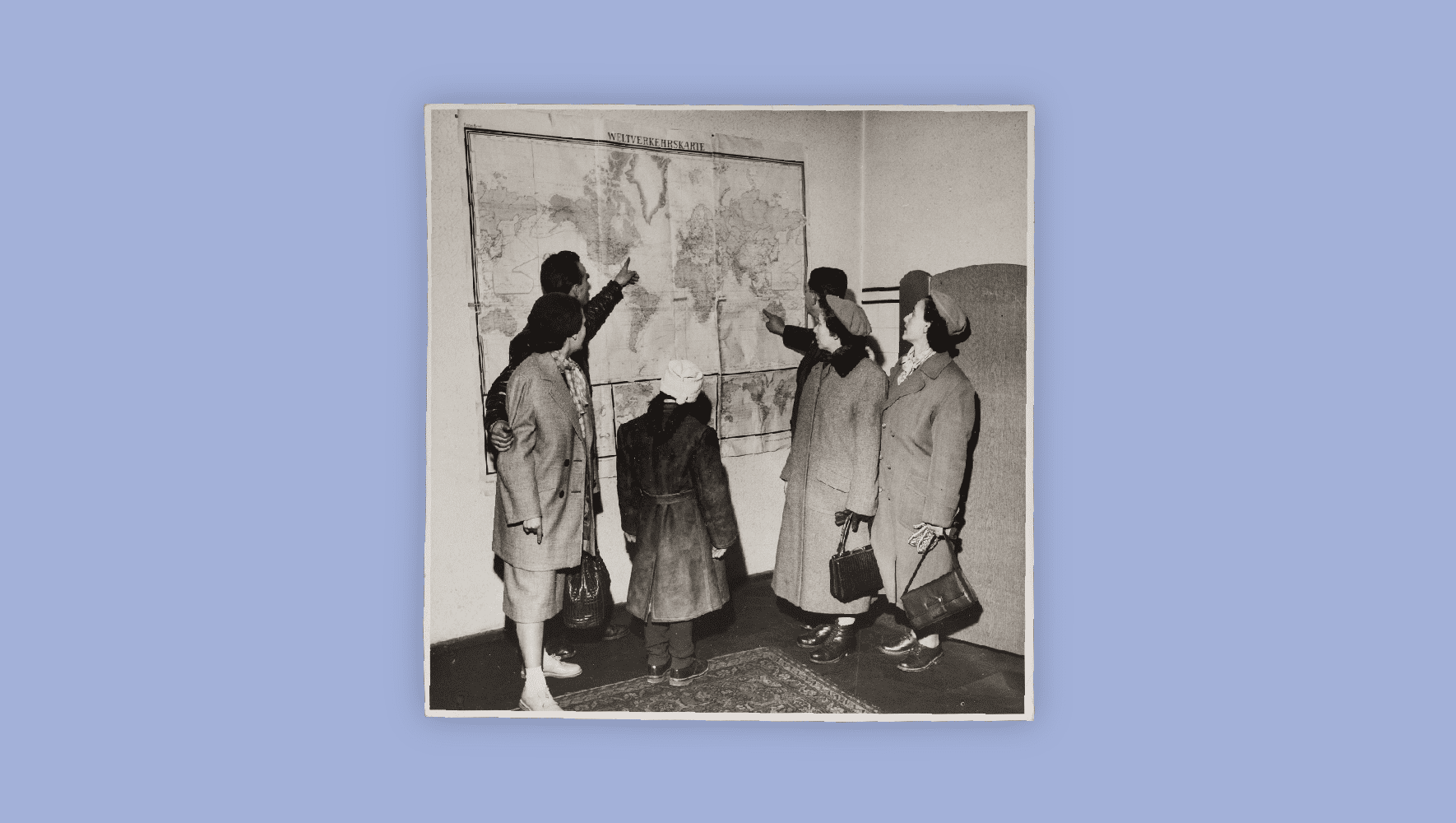
Honoring 45 Years of HIAS Austria: A Historic Refugee Pathway Is Shut Down
Read MoreInformation for U.S. Ties with Care and Maintenance (C&M) Deposits on File with HIAS
HIAS is committed to refunding the Care and Maintenance (C&M) deposits to the U.S. Ties of participating Iranian Lautenberg cases. HIAS intends to make a reasonable, good faith effort to locate U.S. Ties about their refunds.
To receive your refund, you must fill out this form completely and accurately and provide your banking information as soon as possible. We recommend that the form be filled in digitally, in order to avoid any mistakes. Additionally, you must attach a bank letter or a voided check from your current account to avoid banking processing errors. You must provide the form and the supporting bank information (bank letter or voided check) to HIAS by replying to this email address: CMdeposit@hias.org.
To protect your sensitive information, we strongly recommend that you encrypt the PDF document before emailing it back. Should you decide to encrypt the file, please ensure to share the password with us in a second email.
HIAS will make several attempts to contact you, if possible, in the effort to return your C&M deposit. In the event that HIAS is unable to reach a U.S. Tie, or that a U.S. Tie does not respond to requests from HIAS for required information, HIAS will turn unclaimed funds over to state-run unclaimed property offices. Kindly note that this process will likely take several months.
Please use hias.org/ethics to report any suspected fraudulent activity.