Seventy-five years ago, the world gathered together to create the Refugee Convention—a promise to learn from the horrors of World War II and instead provide safe pathways for people fleeing violence and persecution. Yet, this year, the rights of refugees and displaced people are far from guaranteed, and instead under a constant barrage of unprecedented attacks.
As we commemorate this World Refugee Day, we must recommit to supporting refugees, asylum seekers, and all displaced people around the world. That’s why we’re uplifting the stories of five incredible people who are rebuilding their lives against all odds. From entrepreneurs to students to activists, these refugees are finding hope, resilience, and courage in the most challenging circumstances.
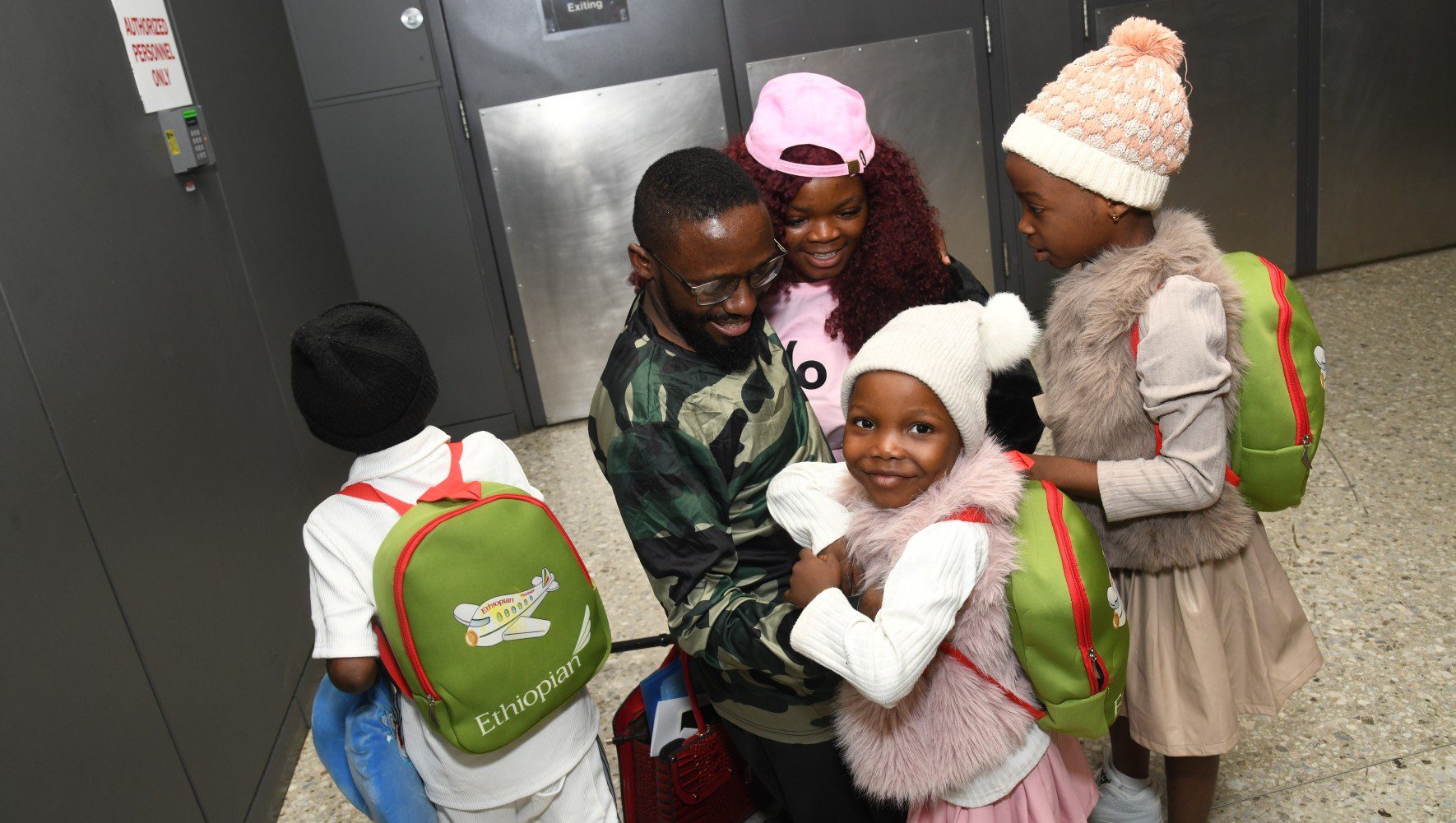
Fon: Reuniting with His Family in the United States
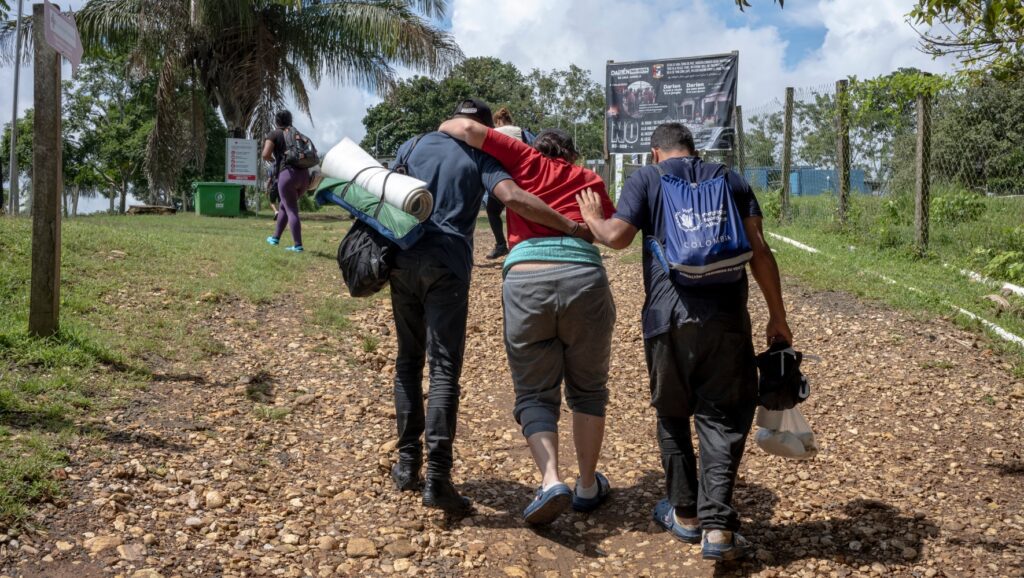
By the time Fon reached the United States, he had crossed 13 countries (including the notoriously treacherous Darién Gap) on foot to reach safety. Living with a disability, he relied on a wheelchair and crutches. Like many displaced people, he carried trauma from what he survived, grief for what he lost, and fear of what could still happen next.
“The pain in my country was scarier than the Darién Gap. On my way to the U.S. I was conscious I could die on the journey,” Fon said “I didn’t come to the U.S. looking for a new life. I came looking for safety.”
After arriving in 2023, Fon sought protection and was granted asylum the following year. However, Fon quickly learned that obtaining legal status is only the beginning. Fon’s wife and children were still in Cameroon. His wife, an activist advocating for the rights of people with disabilities, had been targeted for her work and was forced into hiding. HIAS’ legal team began working with Fon to petition for his wife and children to join him in the U.S., helping him take steps toward reunification.
At the same time, Fon was referred to HIAS’ social services team to help him due to financial and emotional stress as he worked to rebuild his life. HIAS helped Fon meet basic needs, correct his paperwork, obtain a state-issued ID, enroll in health insurance, and apply for financial assistance to repair his wheelchair. HIAS also provided Fon with emotional support and helped him develop tools for managing fear, anxiety, and distress.
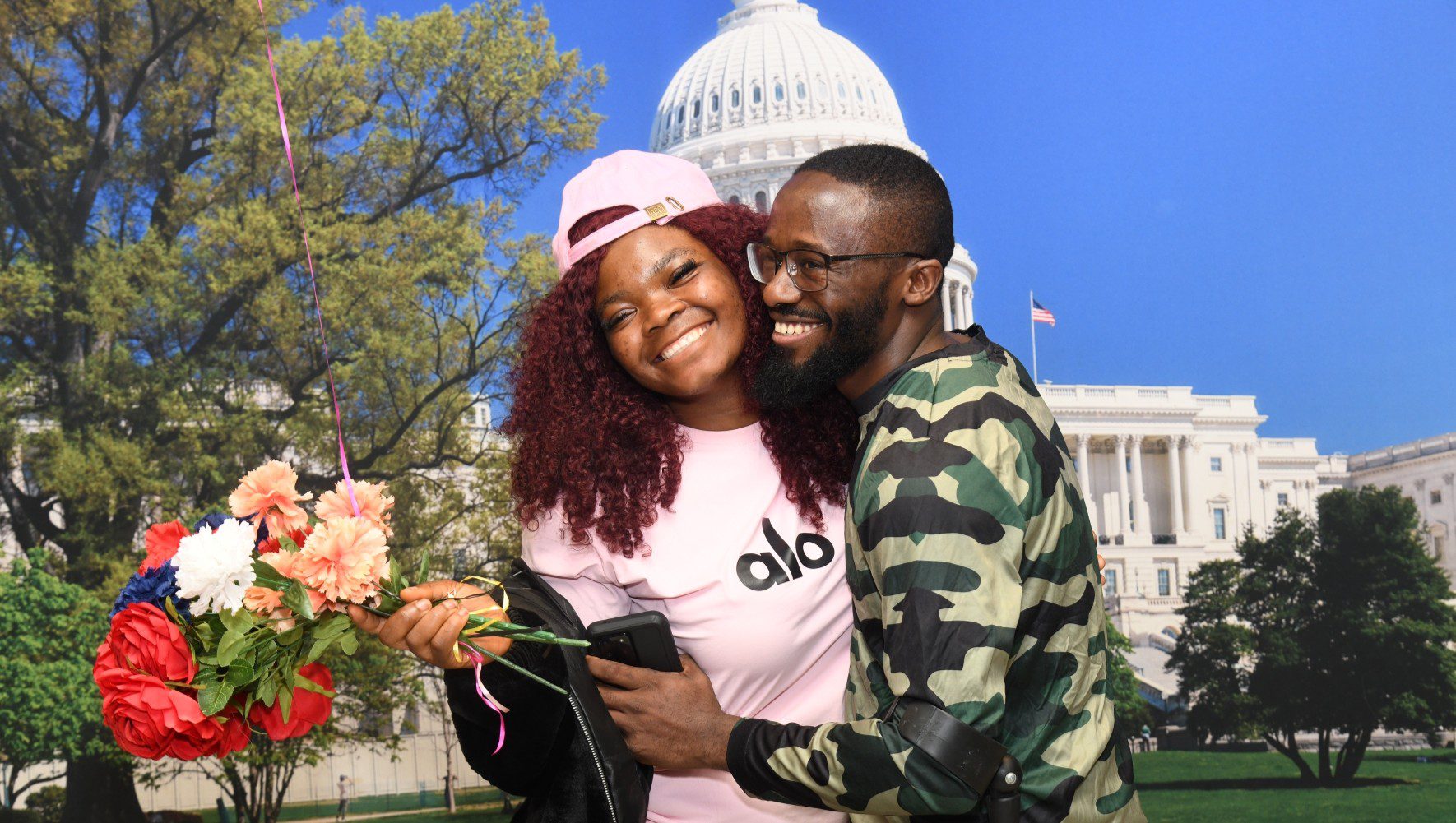
And in December last year, after years of separation and uncertainty, Fon was reunited with his wife and children in the U.S.
“Getting [my family] here clears all my pain. Facing immigration challenges while having HIAS support me is a shoulder I won’t forget,” Fon said.
Donate today
Now more than ever, your support is needed to help refugees and displaced people rebuild their lives.
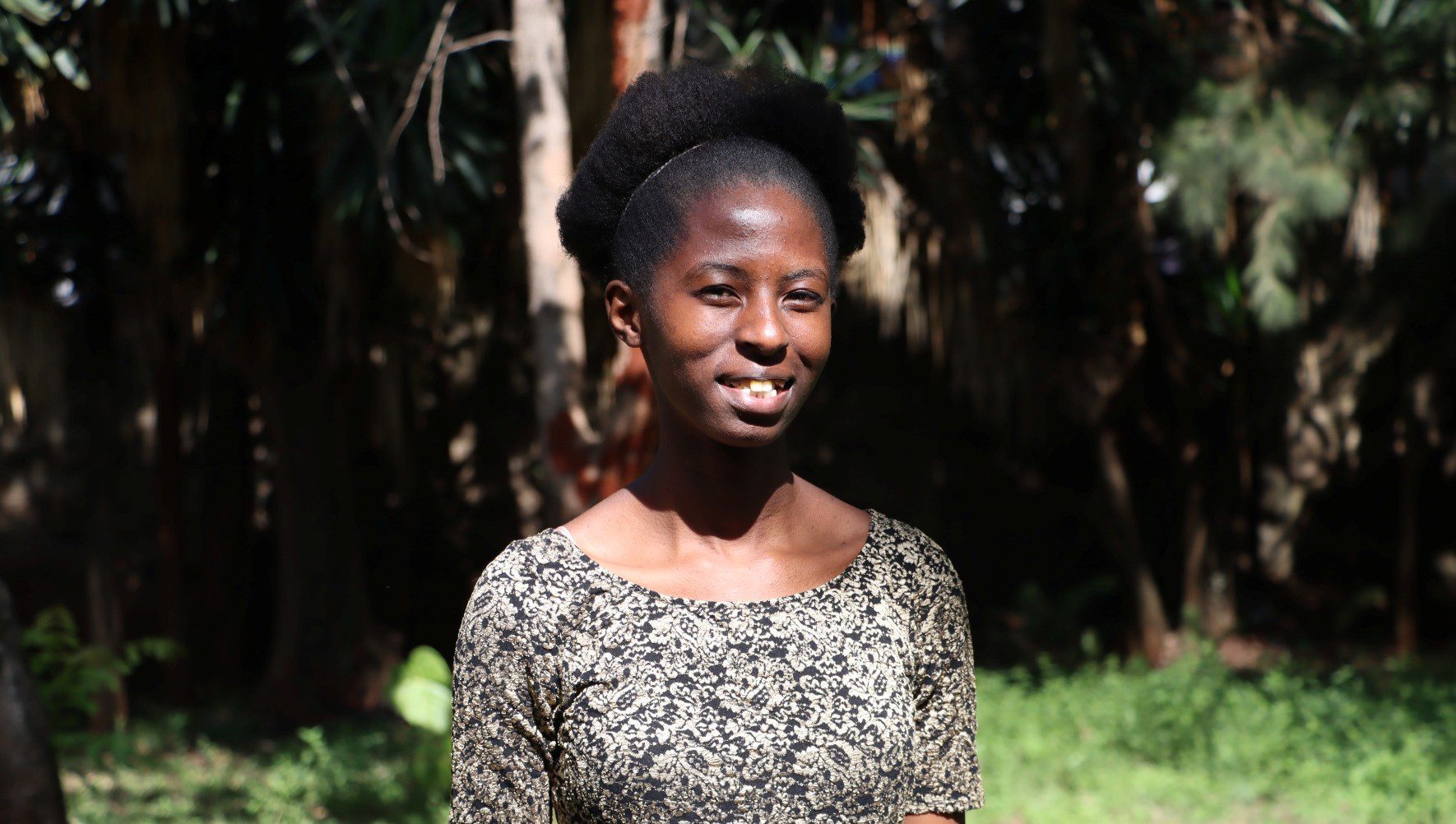
Linah, a young woman born in Kenya to Ugandan refugees and aspiring electrical engineering student, participates in HIAS Kenya’s Self-Help Plus mental health program, supported by ECHO. (Violet Mburu/HIAS Kenya)
Linah: Finding Mental Health Care in Kenya
Linah, a young woman born in Kenya to Ugandan refugees, is an electrical engineering student with big dreams. Last year, however, she was forced to put her education on hold because of financial constraints. She has repeatedly been denied internship and work opportunities because of her refugee status. Eventually, she became overwhelmed by stress, isolation, and self-doubt.
“I felt like I would never become someone substantial,” Linah said.
Linah eventually joined HIAS Kenya’s Self-Help Plus program, a structured group stress-management course that helps refugees improve their mental health. Within the Self-Help Plus program, Linah was surrounded by young people her age facing similar struggles. It helped her realize she was not alone.
“What made the program successful for me is that I connected with other people,” she said. “It made me feel like I truly belong and that I am not alone.”
In time, Linah was able to obtain IT skills which led to a part-time job, keeping her dreams afloat. She hopes to complete her diploma and pursue a career as an engineer. She is grateful for the constellation of support from community leaders, county initiatives, and HIAS Kenya’s mental health interventions that made her current confidence possible.
“There’s a calming effect and a sense of belonging that comes with these sessions,” Linah shared. “Mental health is often overlooked, but through programs like Self-Help Plus, we finally have a place to speak openly.”
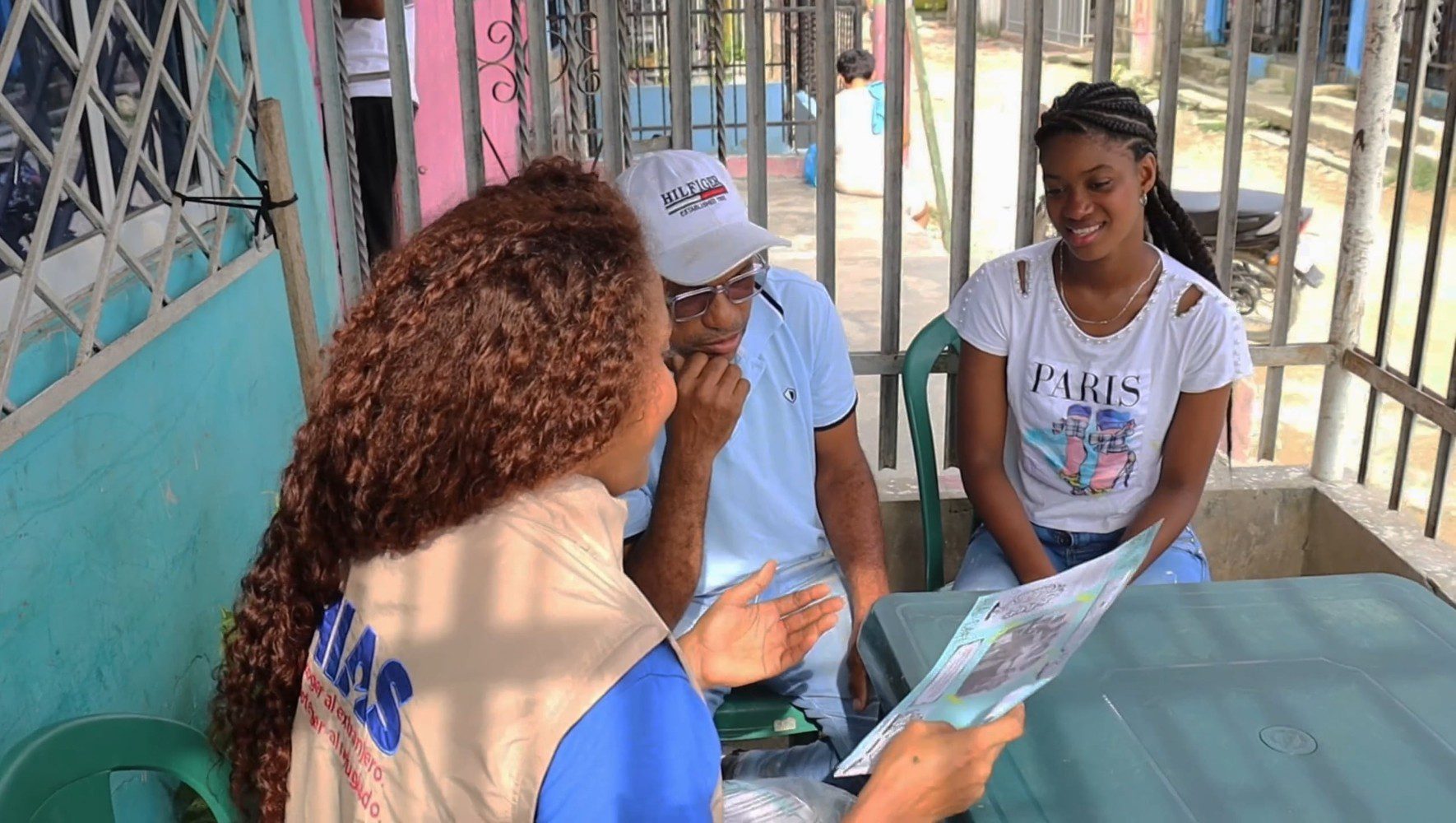
HIAS Colombia provided Naide with a DAFI scholarship so she could pursue her degree and rebuild her life.
Naide: Following Her Dreams in Colombia
When Naide arrived in Colombia a decade ago, she never expected to be attending college. She was amazed when she not only received the DAFI scholarship, a program provided by HIAS Colombia and UNHCR, but also a computer and other materials with which to study. In addition, HIAS provided Naide with mental health care to help her manage stress and build her self-esteem.
“[HIAS] helps me every day to highlight the good things so I can trust myself and feel good about myself,” Naide said.
Naide is studying agro-industrial engineering and hopes to pursue a master’s degree in the future. Her most important goal is to provide for her parents and family.
“I would tell my mom and dad that I’m going to make them proud of me because I’m learning like they’ve always wanted,” Naide said. “I’m going to be the first professional [in my family] and I hope that after that my nephew or my children, if I have any, will follow my example.”
As part of the DAFI program, students are encouraged to volunteer and give back to their communities. Naide volunteers with younger kids to inspire them to pursue higher education. Volunteering has also helped her overcome her fear of public speaking and gain more confidence in herself. Ultimately, Naide hopes to give children the tools they need to chase after their dreams.
“One can never lose hope; one always has to fight for something,” Naide said.
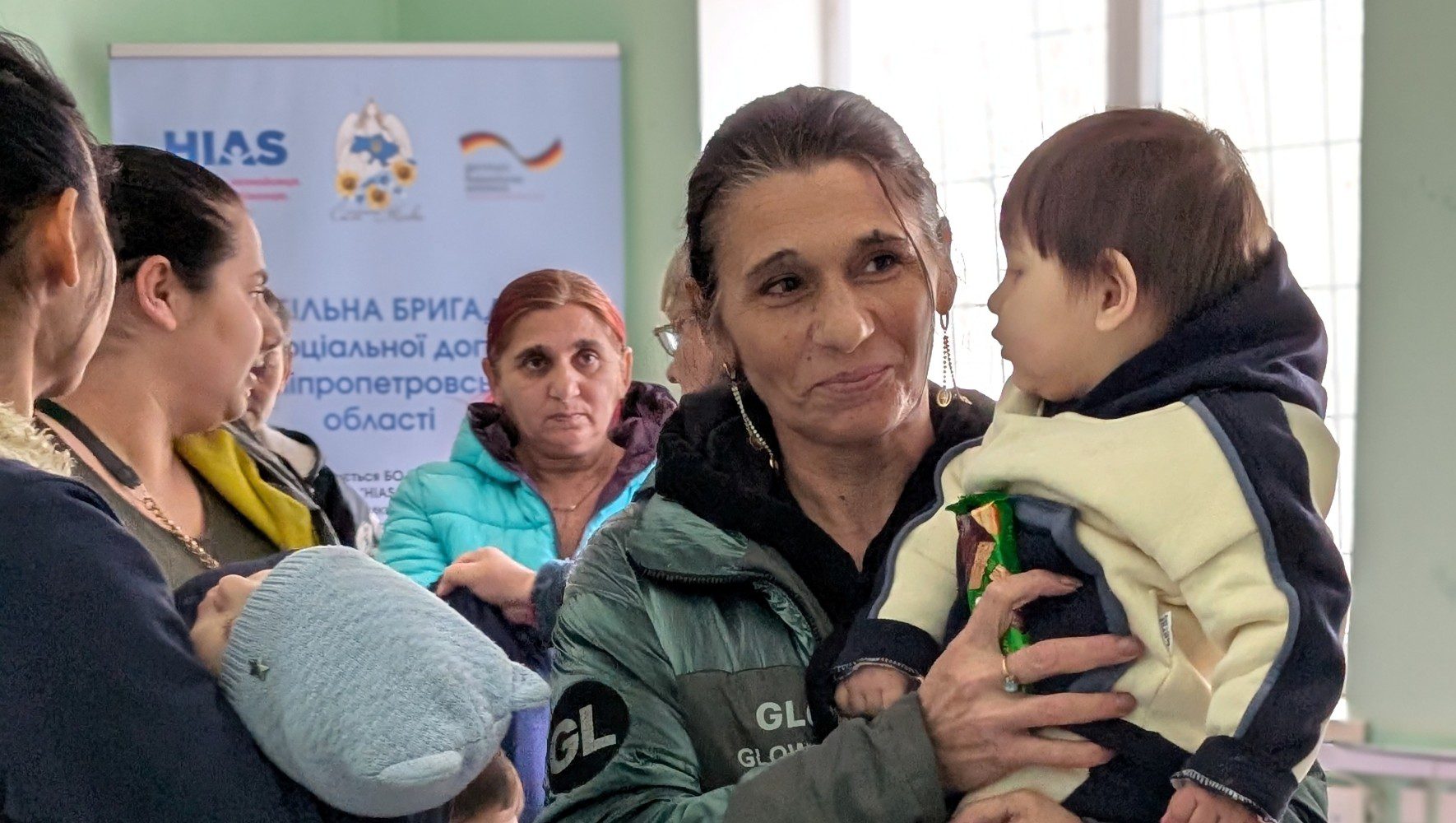
Anna* attends a violence prevention workshop led by HIAS partner Power of a Woman, funded by the German Federal Foreign Office, in Ukraine in 2025. (Power of a Woman) *Named changed for safety.
Anna: Feeling Seen and Supported in Ukraine
Anna*, a 40‑year‑old mother of three from the Roma community in Ukraine, has faced many obstacles throughout her life. She had limited opportunities to attend school and cannot read or write.
Before the war, she found seasonal work helping small farmers, but many of these opportunities disappeared as businesses left the region. Without formal education, securing work has become even more difficult. Her family struggles financially and often cannot afford basic necessities.
HIAS partner Power of a Woman (PoW) provided Anna with essential supplies and access to trainings on preventing and responding to violence. The dignity kit she received became more than just a gesture of care; it significantly improved her access to hygiene products and enhanced her living conditions. Through PoW awareness sessions, she also learned about various forms of violence and the steps to take when she or others encounter it.
“I felt cared for. We are usually ignored, and no one ever asks if we need support,” Anna said. “We felt that we are not alone, that someone truly cares about us.”
*Name changed for safety.
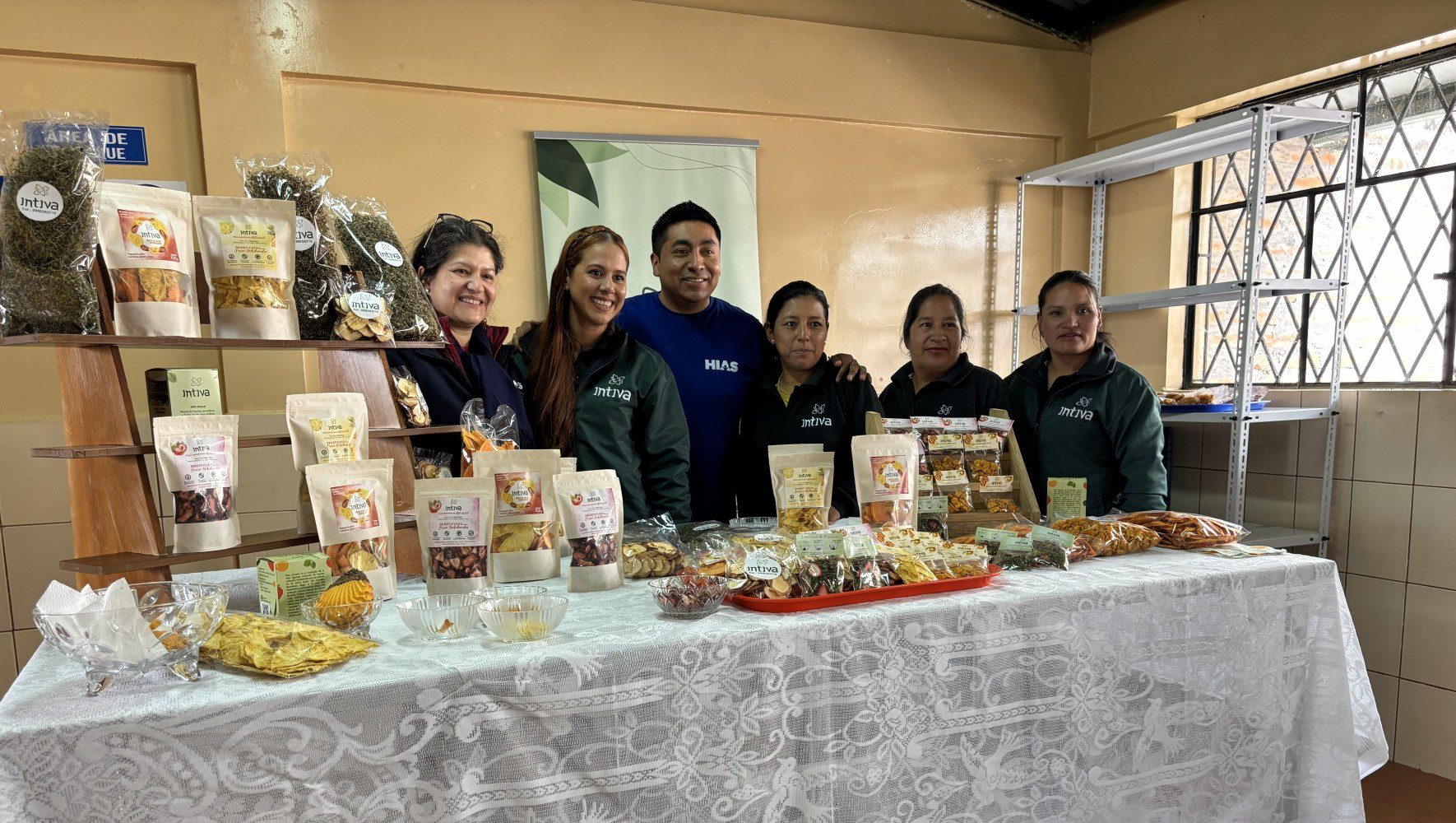
Aziel (second from the left) and her colleagues from women-led agribusiness Intiva table at a community event in Carchi in Tulcán on September 10, 2025. (Emily Primack and Lauren Pach/HIAS).
Aziel: Building a Business in Ecuador
When Aziel first came to Ecuador, she believed it would only be temporary. She needed a safe place to make a living—a stopgap until conditions in her home country improved. She moved from place to place looking for work, hoping to eventually return home and resume her life.
“In my home country, I had many opportunities, and many things had to be put on hold,” Aziel said.
Across Ecuador, HIAS works with displaced people and host community members who face economic insecurity, limited employment opportunities, and heightened risks of exploitation and abuse—particularly women. Through an agribusiness initiative supported by UNHCR since 2017, HIAS Ecuador helps program participants build emotional stability, strengthen community ties, and create sustainable livelihoods in border regions and marginalized urban areas.
As Aziel was struggling to make ends meet, she learned about HIAS’ agribusiness initiative, which combines entrepreneurship training with mental health support for displaced people like her.
“At the time, I looked for other ways to generate income and even thought about going somewhere else, thinking that changing locations would help,” Aziel said. “But I was able to experience that being in one place allows for emotional and physical stability, and this has also helped me to achieve financial stability.”
In 2022, HIAS Ecuador awarded scholarships to participants from the group, including Aziel, one of the founding members of INTIVA, a collective agribusiness specializing in herbal infusions and dehydrated fruits. INTIVA brings together five women of different nationalities, demonstrating how displaced people and host community members can build shared economic futures.
Over the last few years, HIAS Ecuador has helped Aziel and other INTIVA members manage their finances, plan for growth, and sustain their business over time.
“Beyond our shared ambition with my colleagues to start a business, HIAS presented an idea that incorporated all of us to feel encouraged to take the first steps,” Aziel said. “We have been given the chance to turn our efforts into a reality.”
Today, Aziel and INTIVA are not only growing their business, but also building stability, confidence, and a shared future in Ecuador.
Donate today
Now more than ever, your support is needed to help refugees and displaced people rebuild their lives.