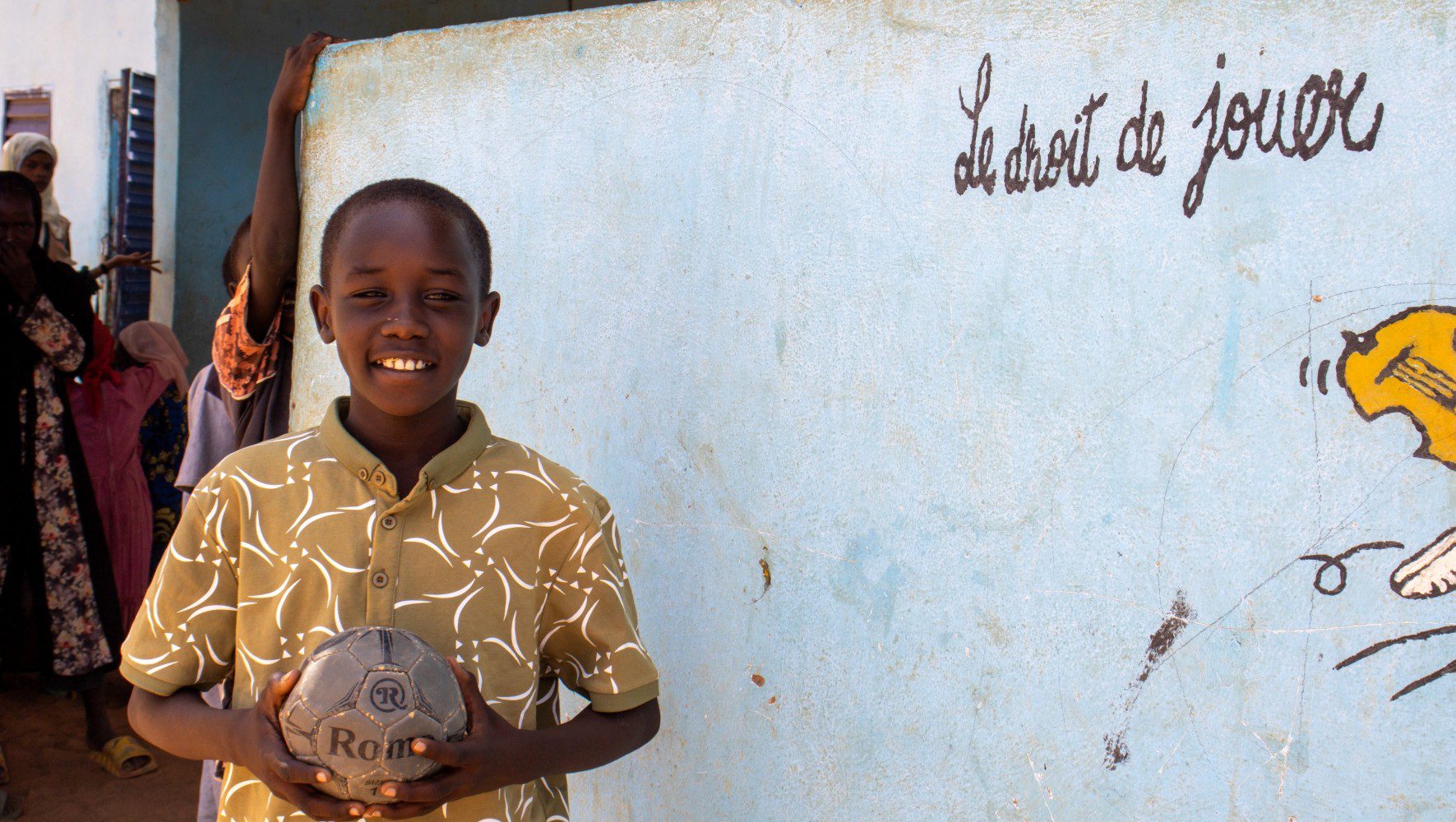
When the civil war in Sudan reached his hometown of Geneina in May 2023, 11-year-old Bachir had only a few moments to flee with his parents. He left behind all his belongings, including his cherished soccer ball. “I think about it often,” he shared.
Three years later, Bachir lives in the Farchana refugee camp in eastern Chad, where he is trying to rebuild his childhood. Like many children who have fled violence, he remembers the long days of walking and the harrowing scenes he witnessed on the journey into exile.
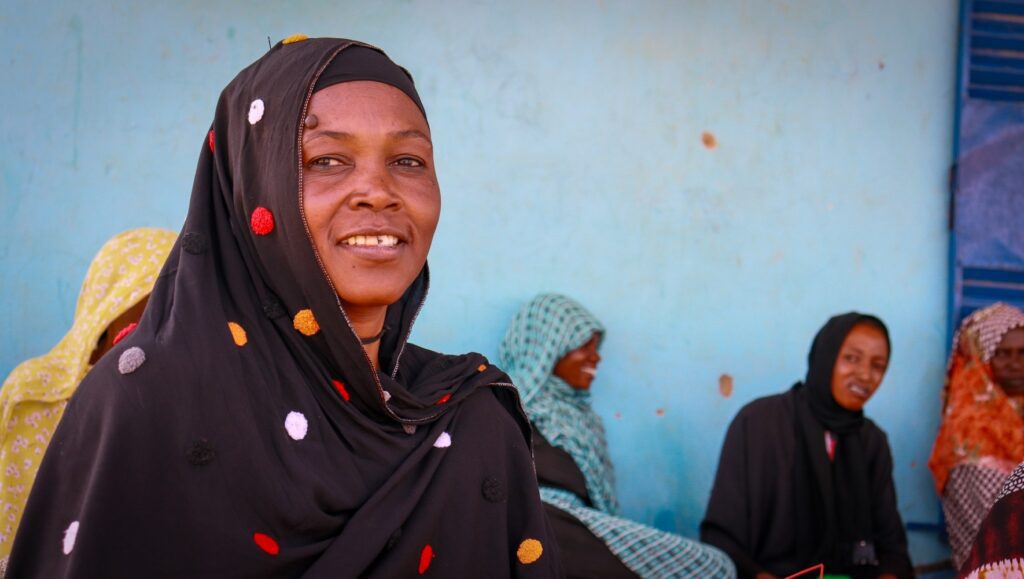
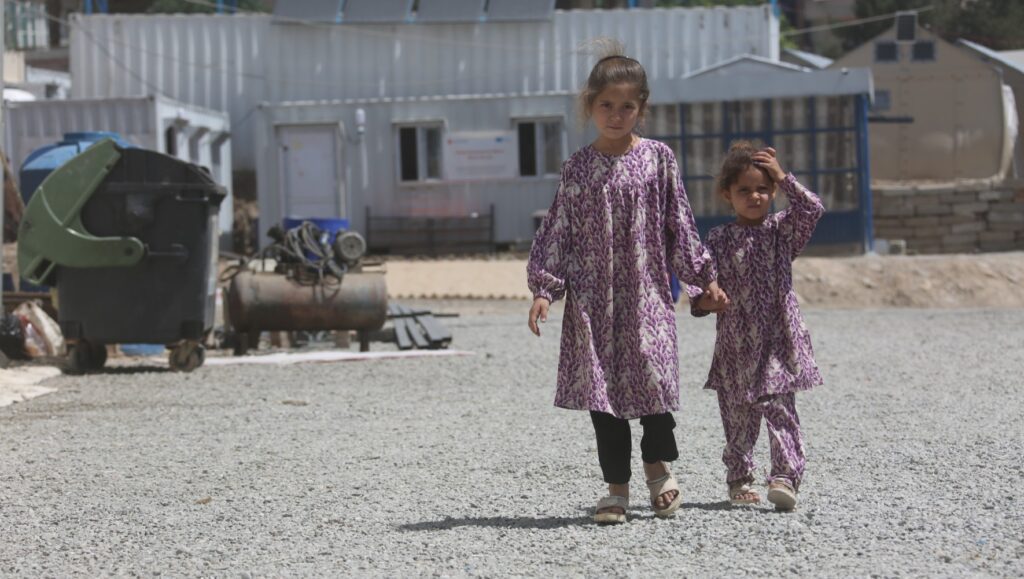
More than three years into the conflict, 14 million people have fled the brutal conflict, both within Sudan and to neighboring countries like Chad. There, more than 900,000 are currently seeking safety, including more than 500,000 children. While Chad has generously provided emergency aid to the new influx of Sudanese refugees, it faces its own humanitarian challenges and already has an existing large displaced population.
Globally, 39 percent of refugees are children. In Chad, 61 percent of Sudanese refugees are under the age of 18, and are at risk of violence, hunger, and disease. Many are unable to attend school and are recovering from the trauma of displacement.
“I see every day how displacement, poverty, and limited services expose children to violence, exploitation, and neglect,” said Anitha Niyongira, HIAS Chad Program Manager. “Bachir is one of many children growing up in overcrowded conditions where safety is never guaranteed.”
Yet, in the face of such odds, thousands of Sudanese families and their Chadian hosts are building communities together. Thanks to the support of Chad Humanitarian Fund, HIAS Chad provides protection services, including child protection, as well as mental health care and economic assistance to refugees and their host communities.
Your support matters
Your donation will empower HIAS to provide life-saving humanitarian assistance to refugees and displaced people where and when it’s needed most.
With help from HIAS, Bachir is now able to focus on the two most important things to him: school and soccer. After several months away from school, he resumed classes and is doing well despite the new environment.
“Here, everything was different. The educational system has changed,” Bachir said.
Bachir is also thriving at the Espace Amis des Enfants, a child-friendly space supported by HIAS. Between soccer games, drawing sessions, and group games, he is gradually regaining what the conflict had taken from him: the right to live, dream, and play like any other child.
“This place is like a second home,” Bachir said with a smile.
Even in the shadow of war, Bachir is still dreaming of his future, hoping to one day become a professional soccer player. A huge fan of Lionel Messi, he passionately followed the 2026 World Cup at the camp’s makeshift movie theater. Although he had to leave his soccer ball behind, he is still finding ways to play and grow, even within a refugee camp.
“Through targeted child protection support, Bachir found a safe space to learn, play, and begin to heal,” Anitha said. “His story reflects both the risks children face and the impact we can achieve.”
At HIAS, our child protection programming reinforces safe environments for at-risk children and promotes positive parenting. We work with children, parents, and caregivers to implement community-based protection strategies that lower the risk of violence. HIAS fosters peace, dialogue, and creativity within communities and in child-friendly spaces where young people’s rights are respected.
“Strengthening community protection systems and expanding support services is not optional,” Anitha said. “It is essential to ensure every child can grow up safe, protected, and with hope for the future.”
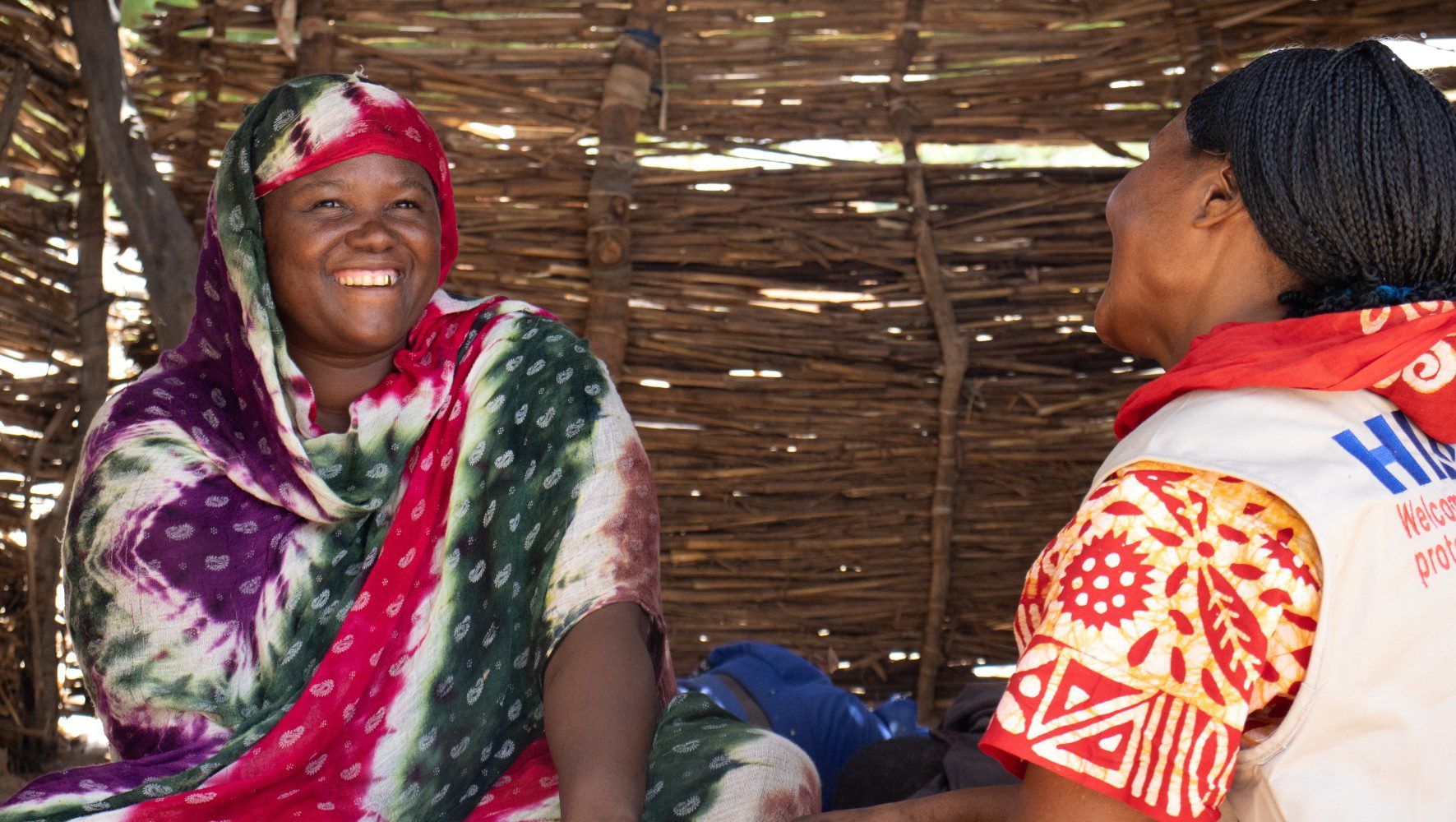
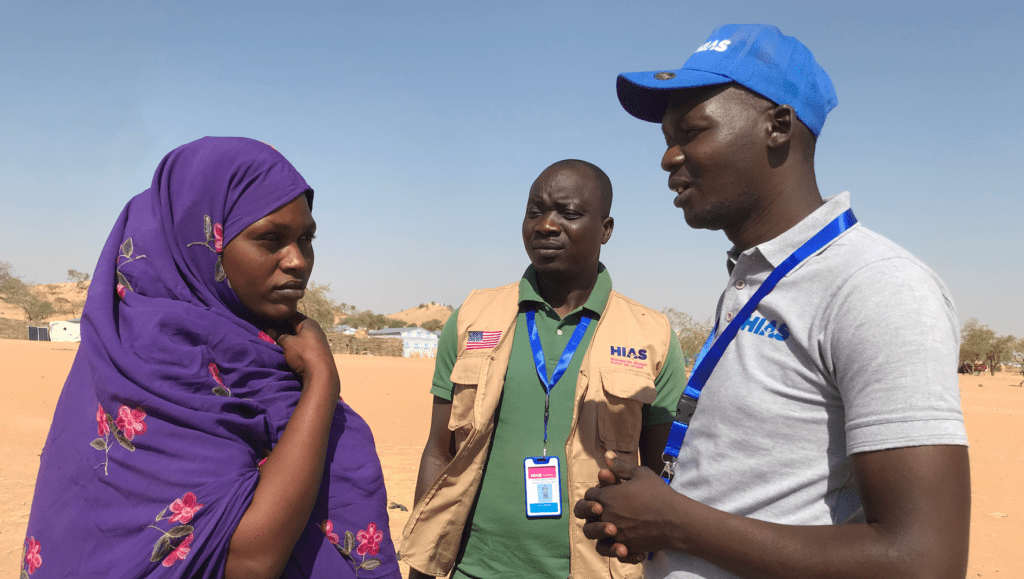
Matoua, a HIAS Chad program participant, speaks with Fatimé, a HIAS staff member, in Arkoum in June 2026 (Saam Kouakaine for HIAS).
HIAS Chad’s child protection programming doesn’t just support refugee families, it also works holistically with host communities who are also at risk.
In Arkoum village in Chad, which now hosts 50,000 refugees, Matoua describes a life profoundly upended since the Sudan conflict began in 2023. As a mother of six, Matoua strives every day to maintain the fragile balance of the household she heads amid severe economic and social constraints.
Before the refugees arrived, her household relied primarily on agricultural crops and a small seasonal vegetable garden. These activities were her family’s main source of income and ensured a certain degree of food self-sufficiency. Today, the farmland that was once cultivated is now occupied by the refugee camp, making it impossible to continue traditional farming activities.
“The situation is very difficult. Without a husband, without fields, and with six children, it’s hard to make ends meet,” Matoua shared.
Despite these tensions over access to resources, she emphasizes peaceful coexistence with the refugee families settled in the area. Matoua understands the impossible situation for Sudanese refugees, having fled violence, but still hoping to return to their home country.
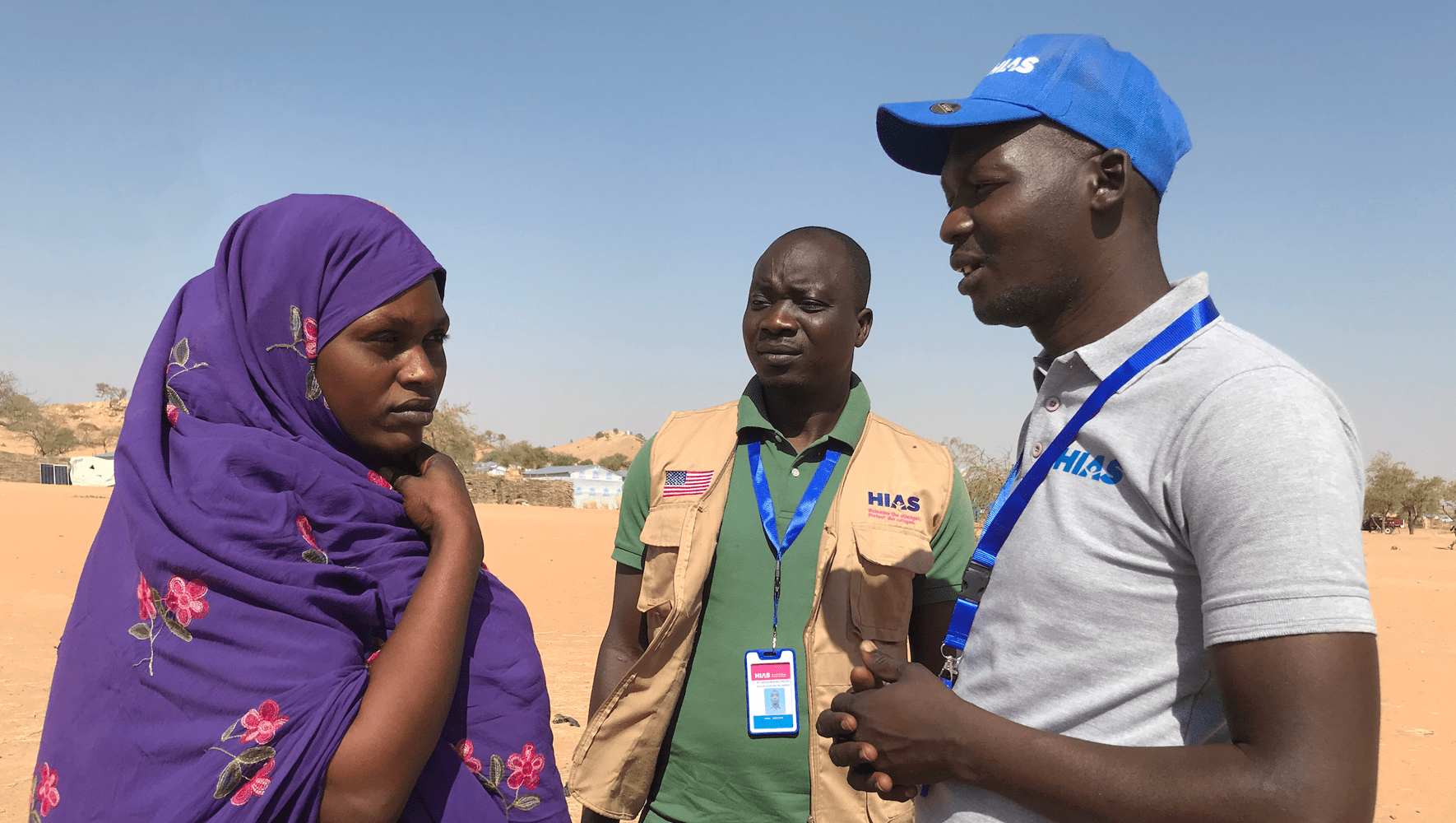
After Three Years of Conflict, Sudanese Refugees Forge New Lives in Chad
Read MoreWith the support of HIAS, Matoua has strengthened the resiliency of her family. Her children, identified as particularly vulnerable, received cash assistance to cover the household’s basic needs, such as food, health care, and clothing. Matoua herself received dignity kits, which helped improve her living conditions.
Beyond immediate assistance, this support also enabled her to start an income-generating activity. She is now able, on a small scale, to generate profits that she reinvests in her children’s needs.
As the lean season approaches, a period between planting and harvesting when food stocks run low and prices rise, Matoua is anxious. With the prolonged absence of her husband, who has been missing for nearly four years, her family lives with economic uncertainty.
Despite all these challenges, she expresses a sense of pride in her growing self-reliance. Being able to provide even partially for her children’s needs represents a significant step forward for her. Without humanitarian assistance at crucial moments, families like Matoua’s would fall through the cracks.
“Thank you to those who support HIAS. Your efforts have a real impact on our survival,” Matoua said. “Please continue to help us. It allows us to gradually get back on our feet.”
Your support matters
Your donation will empower HIAS to provide life-saving humanitarian assistance to refugees and displaced people where and when it’s needed most.