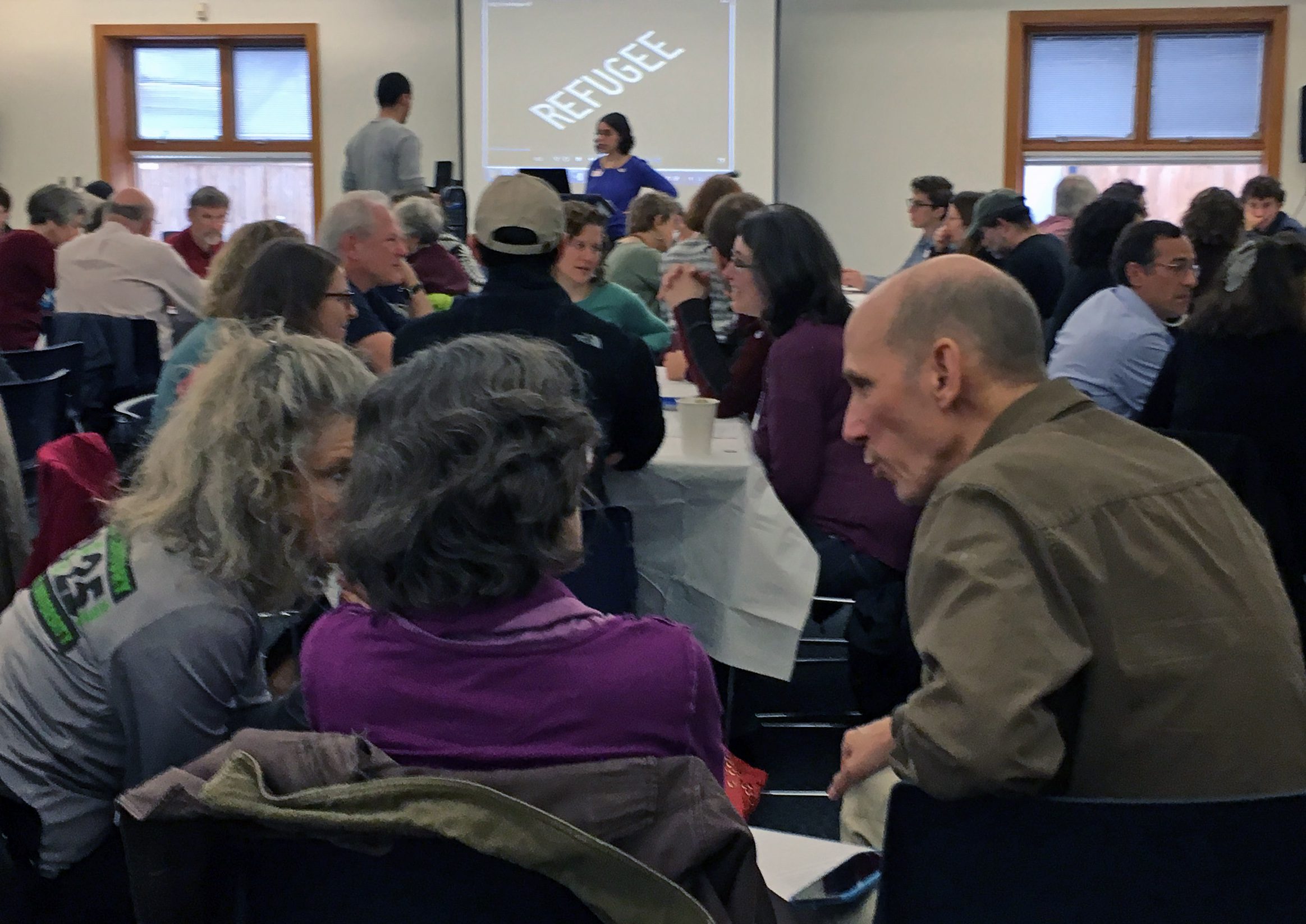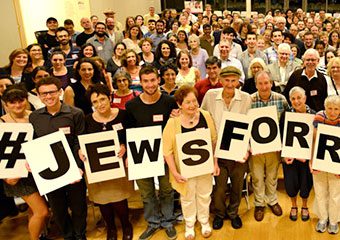
The social hall at Temple Micah in Washington, D.C. was humming with conversation. Roughly 100 people, representing more than 20 synagogues in the D.C. area between them, eagerly awaited information about how their congregations might take on the global refugee crisis in a very local way: partnering with a newly-arrived refugee family through the HIAS Welcome Campaign.
The middle-aged man sat quietly in a nondescript refugee center conference room. On the table before him lay a hand-drawn illustration, a colorful, heartfelt expression of thanks to those who had helped his family reach safety after years of tragedy and trauma.
Across the country, refugees have already begun to gather for Thanksgiving celebrations in the U.S. communities that have welcomed them. Celebrations from Philadelphia to San Diego let refugees and volunteers share the food, and the spirit, of the upcoming holiday.
Early Sunday morning, Charlie Blank and Jenn Corker set off to meet a family of Afghan refugees. A halal turkey sat in a cooler on the back seat. Blank and Corker are members of East End Temple, a Reform Jewish congregation in Manhattan that has been working with HIAS to find ways to support and advocate for refugees.
Recognizing the growing demand for assistance navigating the tedious legal process tied to securing asylum status in the U.S., HIAS recently launched a pro bono training program for attorneys to volunteer their services.
HIAS President and CEO Mark Hetfield was named to the Forward newspaper's annual list of “Jews who have impacted American life” for 2016. This year’s Forward 50 recognizes Hetfield for being at the forefront of the Syrian refugee relief efforts.
It's going to take all of us, working harder than ever, to make sure that refugees still feel welcome in this country. It is up to us to ensure that the U.S. remains a place where families fleeing war and persecution can find safety and dignity.
As part of the ongoing Jewish response to the global refugee crisis, HIAS created new visual resources for congregations and families to print and hang in their sukkahs. The visuals provided an educational component to the familiar sukkot tradition, a reminder that today, 65 million refugees and displaced people still wander the earth in search of a safe place to call home.
In recognition of the more than 65 million refugees and displaced people still wandering the earth in search of a safe place to call home, synagogues and families are “inviting” five individuals into their sukkah this year as they recreate the huts in which our Israelite ancestors found refuge.