As governments around the world increasingly shut the door on refugees and asylum seekers, humanitarians like HIAS Greece’s client Pieter Wittenberg continue to provide lifesaving aid. Pieter’s journey to lending a helping hand began more than eighty years ago.
In 1938, Pieter’s Jewish father escaped encroaching persecution in what was then Czechoslovakia. After arriving in Amsterdam, Pieter’s father was taken in by a small family of three, who then helped shelter him during the five years of Nazi occupation in the Netherlands. The kindness of those initial strangers saved his father’s life, and helped Pieter’s family settle in the Netherlands.
“What those three people did became the reason for my existence,” said Pieter.
Fast-forward to 2015 and 2016, when more than one million asylum seekers and displaced people entered Greece in search of safety in Europe. The crisis overwhelmed governments and NGOs as desperate people were fleeing war, violence, and persecution from Syria, Iraq, Afghanistan, and other countries around the world. Over time, the EU and member state governments chose harsh border control over compassionate humanitarian assistance.
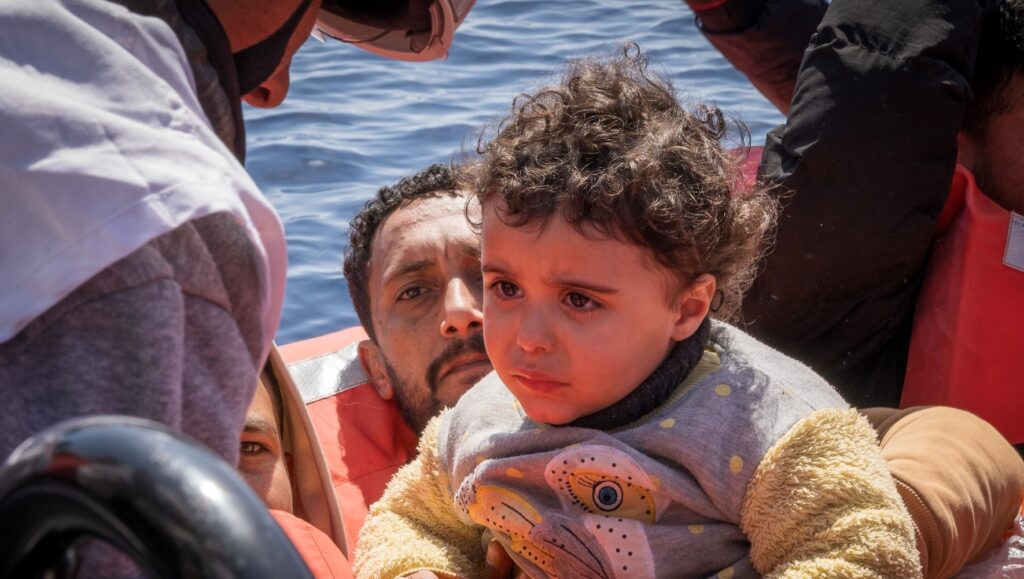
In the Mediterranean Sea, thousands of asylum seekers were attempting to cross the dangerous waters to reach safety in countries like Greece. NGOs and individual volunteers stepped up to provide humanitarian aid as displaced people arrived and helped alert authorities to rescue boats that failed. More than 7,700 people died or disappeared trying to cross the Mediterranean Sea between 2015 and 2016, and more than 1,000 people have died or disappeared in every year since.
Pieter saw what was happening in Greece and knew he needed to help, just like the Dutch family who helped his father during World War II. Pieter volunteered in 2016 and 2017 to provide lifesaving assistance on rescue boats to asylum seekers arriving in Greece.
“In 2016, during one of the many dark nights at sea, spotting for arriving dinghies, I asked myself, ‘What on earth am I doing here on a small RIB [rigid inflatable boat] barely equipped as a lifeboat with a hundred meters of water below me?’ Then I thought of the three people who risked their lives for the strange man who would become my father. I still had an outstanding bill that desperately needed to be settled,” Pieter said.
Your support matters
Your donation will empower HIAS to provide life-saving humanitarian assistance to refugees and displaced people where and when it’s needed most.
Chillingly in 2018, the Greek government charged Pieter and 23 other volunteers and NGO workers with facilitation of illegal entry for profit, membership of a criminal organization, and money laundering. Additionally, they were charged with the misdemeanors of espionage and facilitating a criminal organization, but those charges were acquitted on an earlier appeal.
Essentially, they were charged for providing humanitarian assistance, and if found guilty, could have served up to 20 years in jail. The obvious aim of the case was to deter humanitarians from attempting to help refugees and asylum seekers and has led many NGOs to avoid or pullback their services.
Despite the threat, HIAS Greece immediately stepped up to represent Pieter during the legal proceedings, honoring his commitment to serving refugees in need.
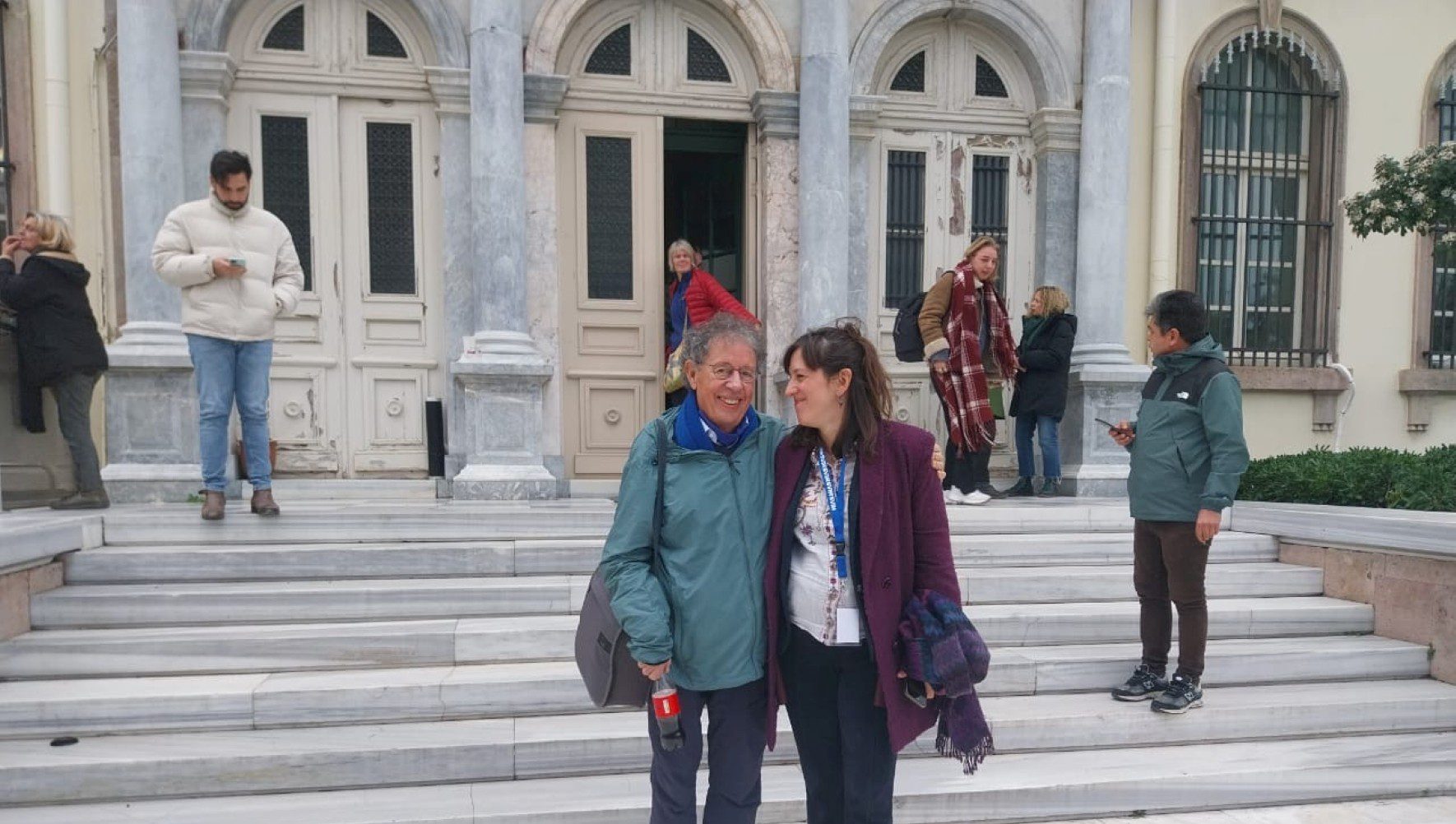
“I consider it an honor to have represented Pieter, a retired Dutch volunteer whose father fled the Nazi regime,” said Maria Spiliotakara, HIAS Greece staff attorney. “Nearly 70 at the time and facing health challenges, he volunteered in Lesvos during a powerful grassroots solidarity movement, taking winter night shifts on remote beaches with the sole aim of saving lives and supporting the most vulnerable refugees.”
I thought of the three people who risked their lives for the strange man who would become my father. I still had an outstanding bill that desperately needed to be settled.Pieter Wittenberg, Dutch volunteer who was put on trial for providing humanitarian aid to asylum seekers in Greece
After eight long years, Pieter and the 23 other aid workers were acquitted of all charges on January 15 at the court in Lesbos, Greece. HIAS views this case as vital in protecting all humanitarian actors from being prosecuted for simply helping others.
“In a landmark ruling against the criminalization of solidarity, the court held that providing first aid and humanitarian assistance on the shores of Lesvos, including within Greek territorial waters, is not a crime and cannot be equated with migrant smuggling or the facilitation of unauthorized entry,” Maria said.
The case is one of many that HIAS pursues to strategically uphold the law in Greece, guaranteeing future rights to both refugees and the people who help them. In a hostile global environment to refugees, where access to asylum is shrinking and human rights violations are growing, HIAS Greece has remained at the forefront with legal aid provision, strategic litigation, and advocacy.
“I am deeply grateful to HIAS for their support and legal defense during the long period of time that I, together with 23 companion humanitarians, was involved in court cases,” said Pieter. “The eventual acquittal was an important turning point in the criminalization of humanitarian aid. Unfortunately, the harm done to the entire system of helping people in need is still there. It will take a long time and lots of energy to be restored.”
Today, even though the numbers aren’t as high as the peak of the crisis in 2015 and 2016, thousands of people still arrive at Europe’s borders seeking safety and freedom every year. HIAS Greece remains committed to fighting for refugees and asylum seekers, no matter what barriers governments dream up to deny access to asylum.
“HIAS and our community of supporters remain unwavering in our commitment to refugees and asylum seekers arriving in Greece and across Europe,” said HIAS Greece Country Director Elina Sarantou. “Following in Pieter’s footsteps means continuing to show up with courage and compassion.”
Your support matters
Your donation will empower HIAS to provide life-saving humanitarian assistance to refugees and displaced people where and when it’s needed most.