As the war in Ukraine approaches its fourth year, millions of displaced people, especially women and children, are still recovering from violence and trauma. With the support of the German Federal Foreign Office (GFFO), HIAS Europe and our local partners are improving access to essential mental health services and social integration for Ukrainian refugees.
In Moldova, HIAS works with women-led local organizations CASMED and Female Support Force (FSF) to provide services to Ukrainian women and children. CASMED delivers mental health care, social integration programs, and economic support, such as cash assistance and vocational training. FSF was founded by two Ukrainian refugees and works to mobilize other refugee women in Moldova. FSF advocates for their rights, leads support groups, and provides leadership training.
HIAS and our partners are helping Ukrainian refugees heal and rebuild their lives in Moldova. Read on to learn about the experiences of two refugees: Galina and Ninel.
Your support matters
Your donation will empower HIAS to provide life-saving humanitarian assistance to refugees and displaced people where and when it’s needed most.
Galina
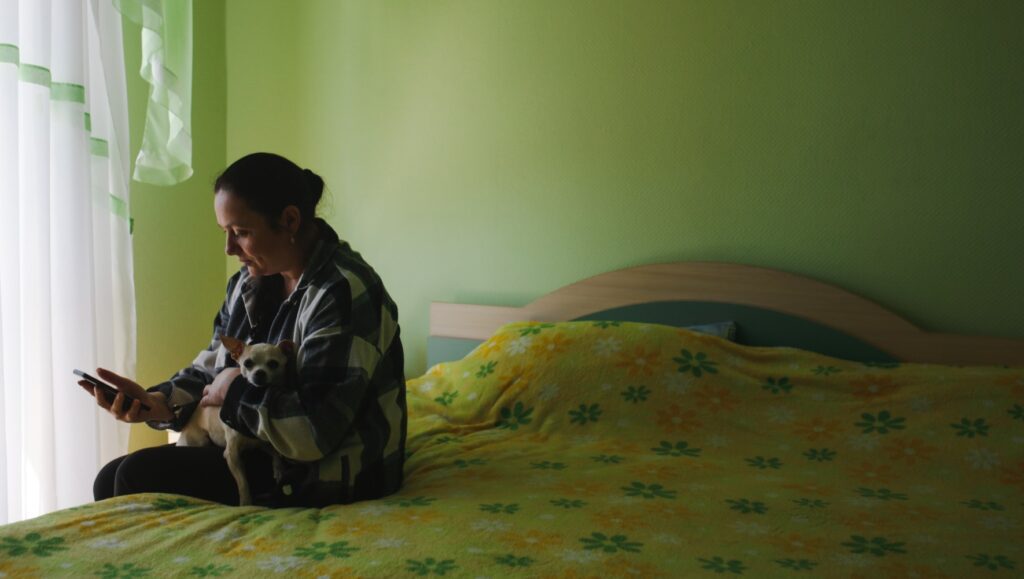
The war in Ukraine forced Galina to leave behind the life she had built and start again in Moldova. Although she managed the practical challenges of resettlement, inside she carried a deep exhaustion she described as “living in stop mode.” No matter how much effort she put in, she felt stuck. She was physically drained, emotionally overwhelmed, and out of balance.
“I wanted to understand why, despite knocking on every door, nothing seemed to work,” Galina said.
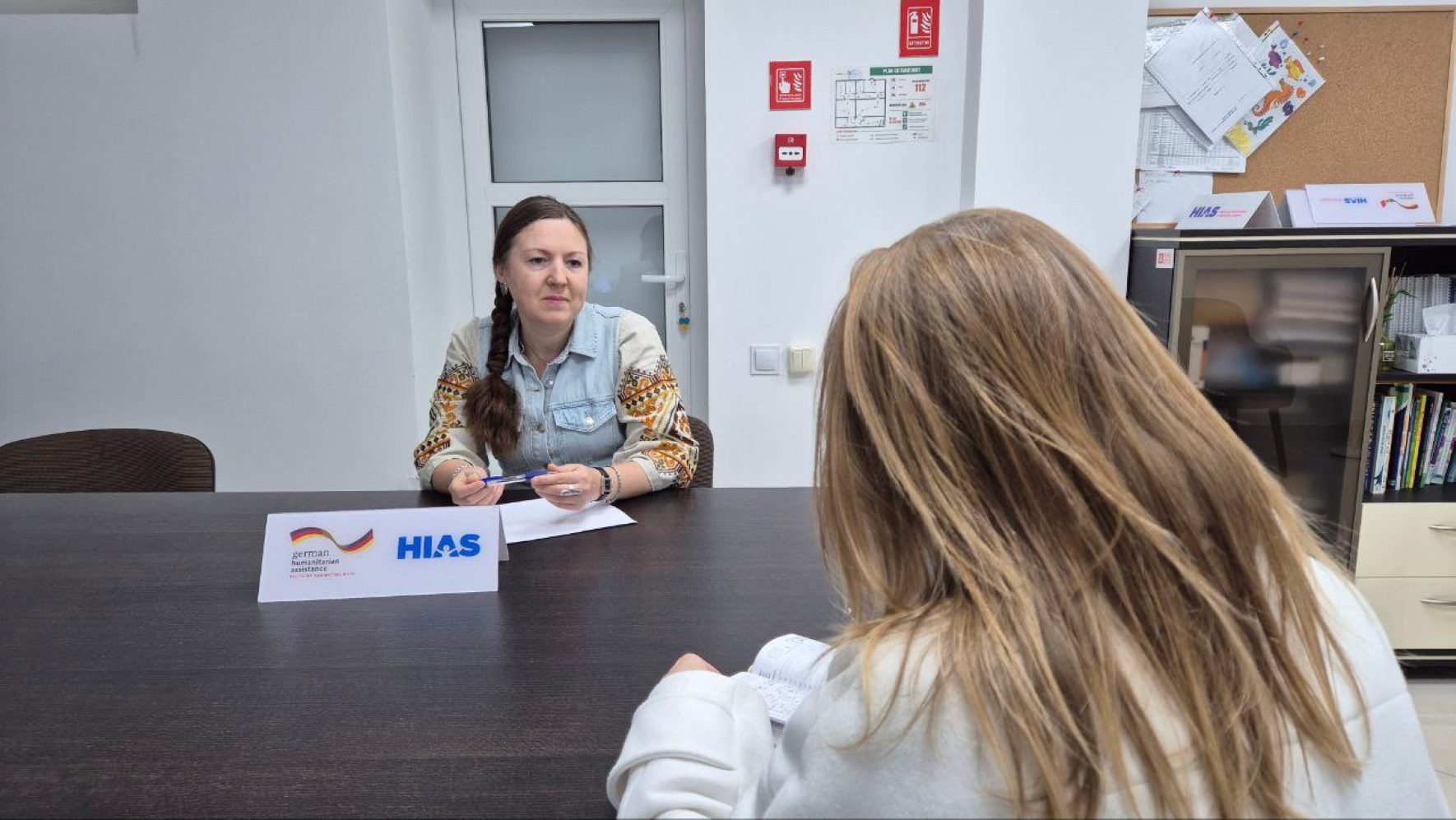
Determined not to wait for someone else to rescue her, she sought support through CASMED’s psychosocial services for refugees, part of the program funded by GFFO and implemented with the support of HIAS. There she met Ana, a psychologist from Ukraine who uses her own experience of displacement to support other women recovering from the war.
Ana’s empathy helped build a strong bond of trust. Together, they worked through various therapeutic approaches, including attentive listening, honest discussions, metaphorical cards, psychological tests, art therapy, and elements of cognitive-behavioral therapy. Each step helped Galina navigate her resistance and uncover what was holding her back.
Ana helped Galina internalize something simple but transformative: she had survived, and she was safe. From this grounding, Galina began rebuilding openness with herself, her children, and her community. She learned to express her emotions and foster healthier communication within her family and social networks.
After months of stress, it felt almost impossible to think about joy. Yet gradually, Galina began noticing small moments again, like a peaceful evening with her children, which became her anchors. She practiced patience, responding differently to her teenage son and staying calm with her younger child’s needs.
“I learned to feel my emotions instead of drowning in them,” she said. “I stopped demanding the impossible from myself and from others. I learned to find compromises with my family. I was searching for support in others, but in the end, I discovered it within myself.”
Three years after arriving in Moldova, Galina has rebuilt her confidence and is pursuing her own business. With support from CASMED and the trust she built with Ana, she now speaks of balance, patience, and the courage to find joy again.
I am deeply grateful for the support and the opportunity to implement my project. In our region, there are almost no activities for refugee children, so this initiative became a breath of fresh air.Ninel, a Ukrainian refugee leader who founded a children's center in her community
Ninel
After Ninel fled the war in Ukraine for Moldova, she threw herself into becoming an active volunteer and community member, assisting other refugees as they adapt and rebuild their lives.
Building on her desire to help others, Ninel participated in a community leadership program called the Women Leaders Network, created by FSF, funded by GFFO, and implemented with the support of HIAS.
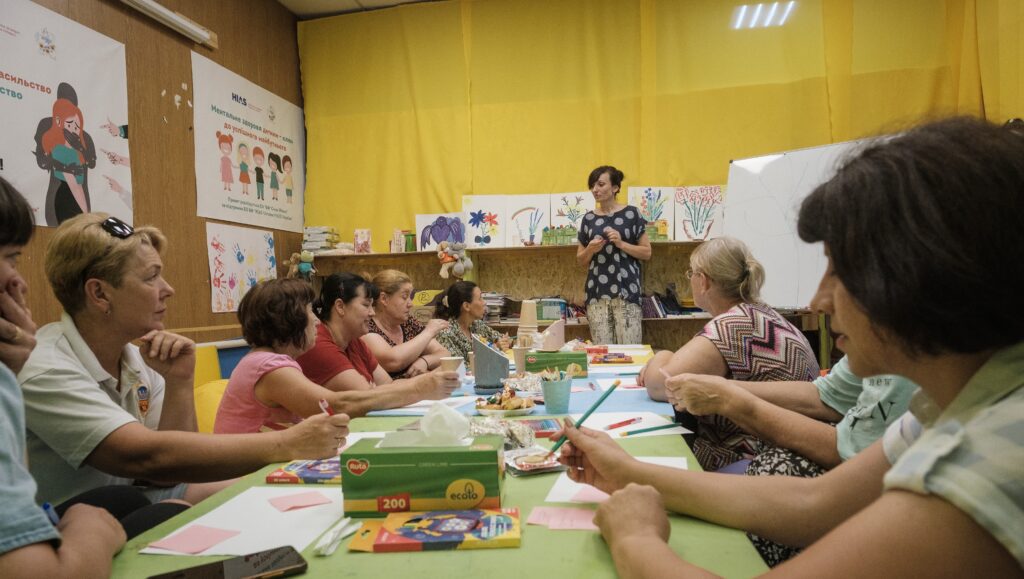
With the support, Ninel founded the Leisure Center for Children and Youth— a safe, creative space where children could learn, express themselves, and develop. The Center hosts art workshops, emotional development activities, and interactive sessions on topics such as bullying and conflict resolution.
“I am deeply grateful for the support and the opportunity to implement my project,” said Ninel. “In our region, there are almost no activities for refugee children, so this initiative became a breath of fresh air.”
The project has reached about 50 children and over 250 community members, strengthening ties among families, educators, and the local community. Despite several challenges, the Center became a vital place of connection, trust, and resilience for children and refugees.
“We worked through tough conditions, without heating, gas, and sometimes without electricity for hours, but the project gave us strength and hope,” Ninel said.
In addition to starting the Center, Ninel built on her experience and received another small grant to organize an environmental event for her community.
Ninel is developing new initiatives for the Center, including graphic design courses for teenagers and basic cosmetology workshops for girls. These programs help young people unlock their potential and build confidence in their future.
The Women Leaders Network continues to thrive, uniting refugee women across Moldova as they rebuild their lives in safety and contribute to their new host communities.
Your support matters
Your donation will empower HIAS to provide life-saving humanitarian assistance to refugees and displaced people where and when it’s needed most.