Since the full‑scale war broke out in February 2022, 5.6 million Ukrainians have been forced to flee Ukraine, and 3.7 million more have been uprooted from their homes and are displaced within the country. Never-ending drone strikes and rapidly shifting frontlines have pushed millions of Ukrainians into poverty and forced many into precarious shelters. Millions of people have been traumatized but remain resilient amidst the devastation.
Through it all, HIAS has been there to support hundreds of thousands of internally displaced Ukrainians and Ukrainian refugees across Europe, Israel, and the United States. We have dispensed emergency aid such as cash assistance, housing, and hygiene kits. We have supported ongoing recovery efforts, providing mental health care, economic support, and protection services. We have engaged Jewish communities across the world to welcome Ukrainian refugees and advocate for their rights.
Even though the Trump administration’s cuts to humanitarian aid have impacted HIAS’ ability to work in the region, we continue to support displaced Ukrainians through our local partners near the frontlines. With the support of the German Federal Foreign Office (GFFO), HIAS Europe and our local partners working on the frontlines are improving access to individual and group counseling, art therapy, economic assistance, violence prevention, legal support, trauma interventions, and basic supplies.
HIAS and our partners are helping displaced Ukrainians find safety, recover from the effects of war, and begin to rebuild their lives. These are their stories.
Your support matters
Your donation will empower HIAS to provide life-saving humanitarian assistance to refugees and displaced people where and when it’s needed most.
Inna and Zhanna
Inna and Zhanna, sisters from Kherson, have always faced challenges together. They first came to the Kherson Regional Center “Successful Woman” (SW) safe space, funded by GFFO and implemented with HIAS’ support, simply looking for a moment of rest. They needed a place to charge their phones, regain a sense of calm, and speak with people who understood what they were going through.
The safe space soon became much more than a temporary refuge. The sisters joined group activities, completed a mental health care course, and regularly participated in support groups. When a sewing and tailoring course opened for enrollment, they were among the first to register. They attended each session with dedication, encouraging one another and imagining a future where they could open a small sewing studio together.
Their plans were disrupted yet again when shelling reached their neighborhood. Forced to evacuate, Inna and Zhanna arrived at the safe space in tears, having lost their home and belongings in an instant. Like many people from Kherson, they had fled with nothing but a single bag.
With support from the Successful Woman project, the sisters received a sewing machine and an overlock, a piece of sewing equipment, to start their small business. Today, Inna has already sewn her first garment and begun taking small orders. Step by step, the sisters are rebuilding their lives and stitching hope back into their future.
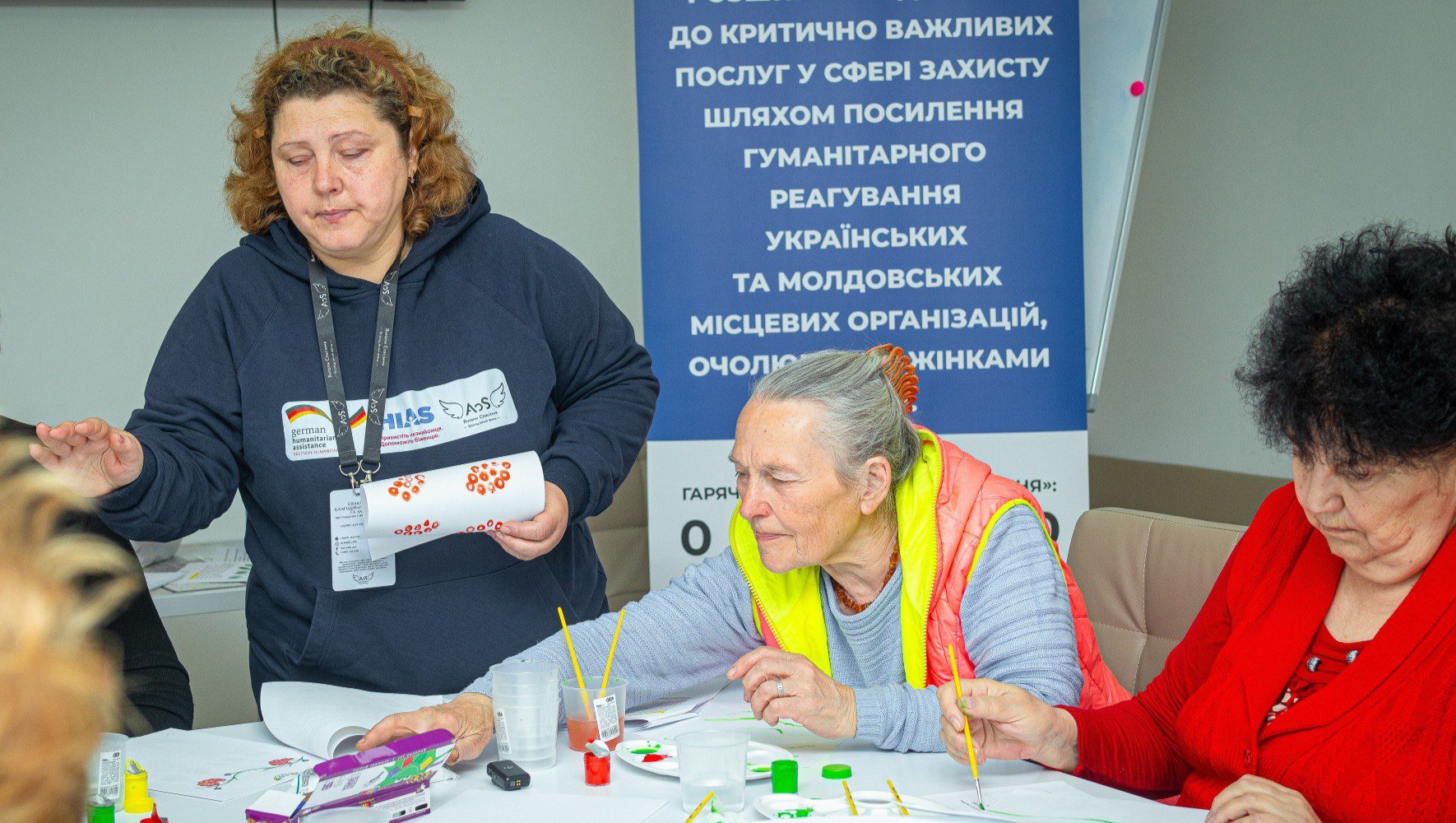
Lidiya (center) attends a group art therapy session led by HIAS partner Angels of Salvation, funded by the German Federal Foreign Office, in Ukraine in 2025. (Angels of Salvation)
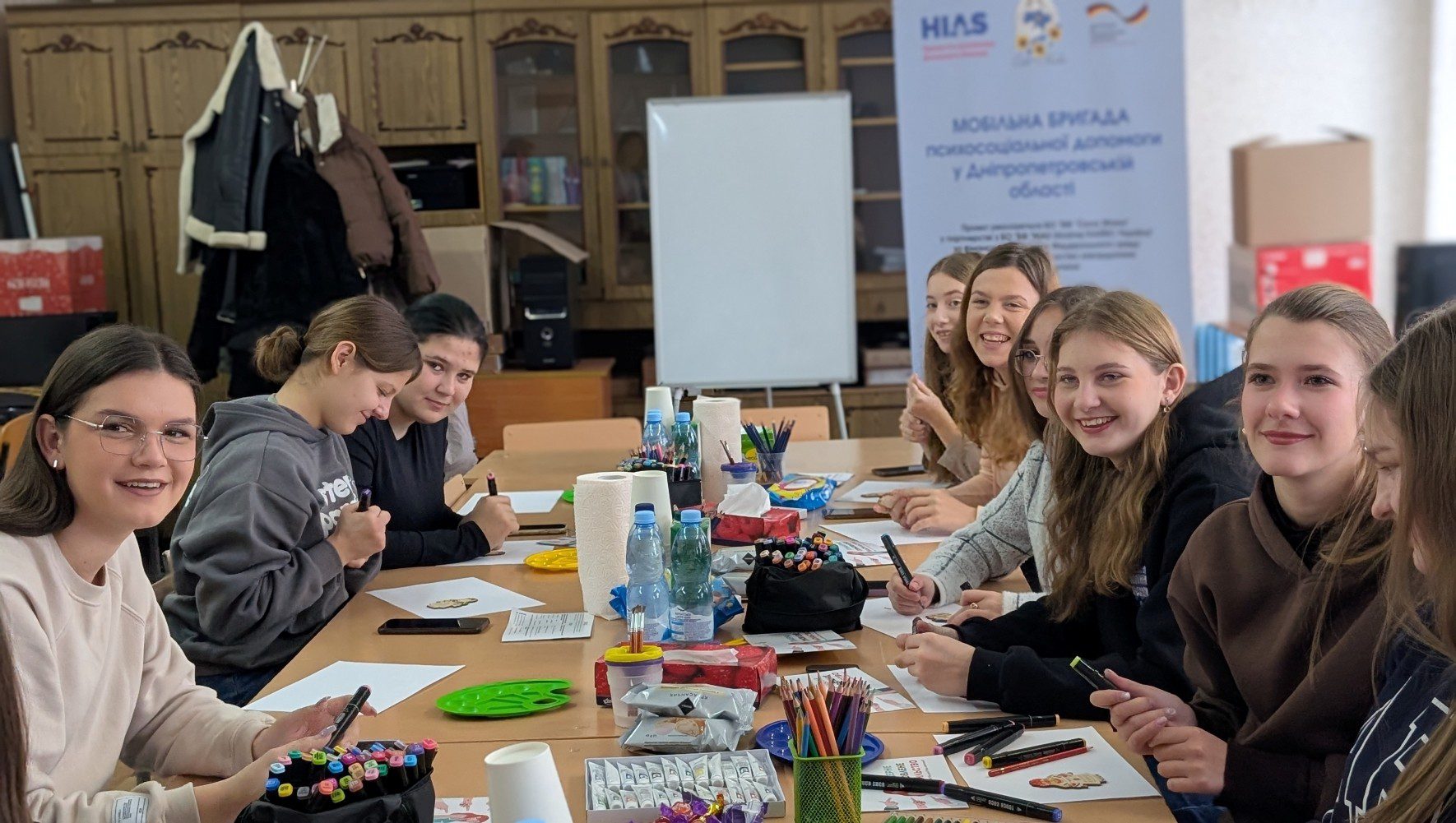
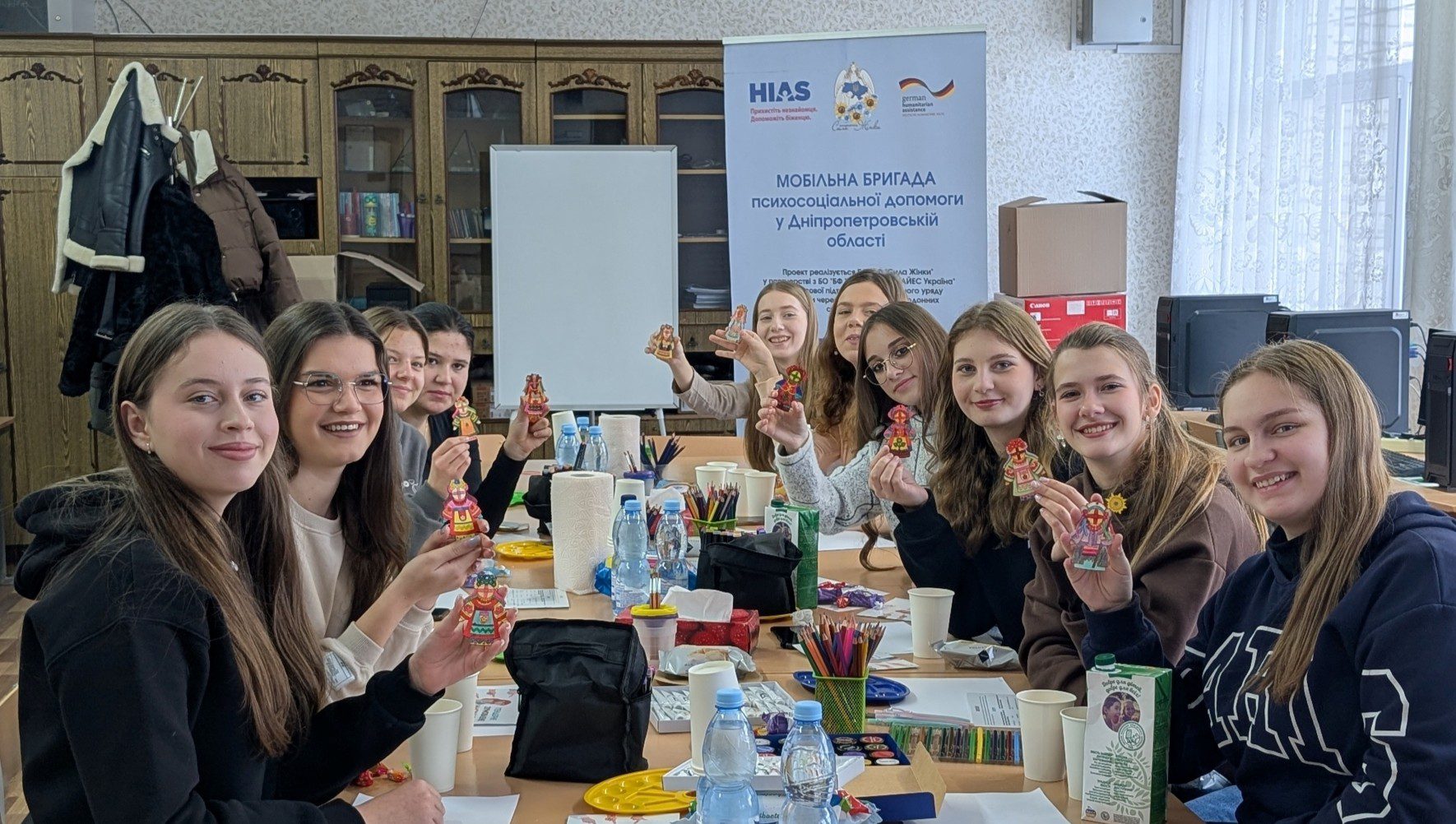
Sofia and her classmates attend a violence prevention workshop led by HIAS partner Power of a Woman, funded by the German Federal Foreign Office, in Ukraine in 2025. (Power of a Woman)
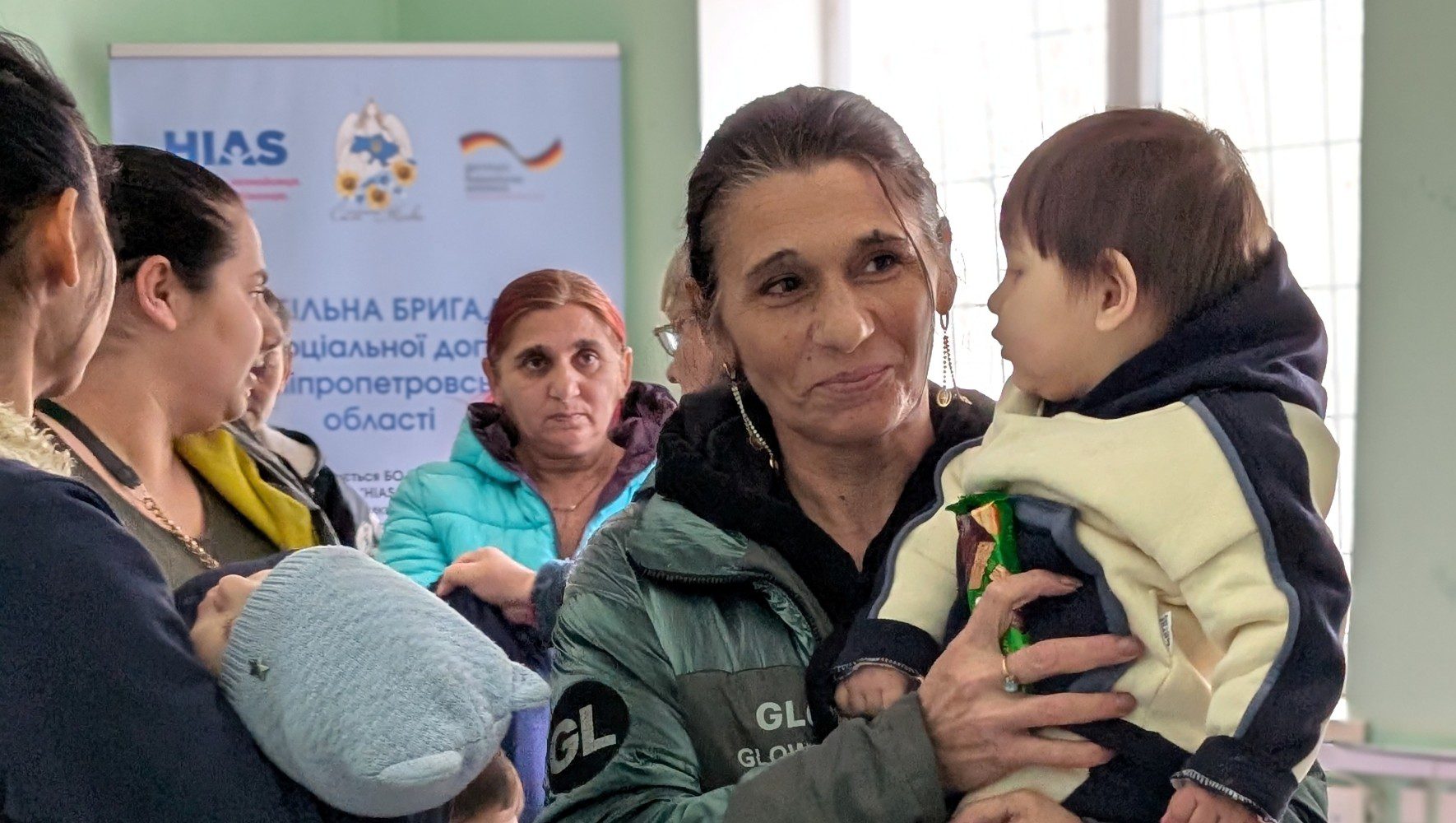
Anna* attends a violence prevention workshop led by HIAS partner Power of a Woman, funded by the German Federal Foreign Office, in Ukraine in 2025. (Power of a Woman) *Named changed for safety.
Lidiya
On the first day of the war, 77‑year‑old Lidiya was in a hospital in Kharkiv with her granddaughter. She remembers the sounds of sirens, ambulances, and fire trucks as panic spread through the city. Her daughter‑in‑law helped them evacuate that same day. Although her village avoided large‑scale destruction, explosions still landed just a few hundred meters from her home.
Since early 2023, Lidiya has participated in trainings run by the Angels of Salvation mobile teams, funded by GFFO and implemented with HIAS’ support. These teams travel across the Kharkiv region to provide mental health support, helping displaced Ukrainians manage stress, process trauma, and strengthen emotional well‑being during the war.
For Lidiya, the sessions are “a breath of fresh air.” They help her restore her emotional balance and reconnect with friends from her community. “You come in feeling like a hedgehog curled into a ball, but after the sessions you calm down,” she said.
Participants are encouraged to reflect, share experiences, and use creative tools such as drawing, writing, or poetry to support their recovery. Inspired by these activities, Lidiya has returned to writing poetry, a pastime she loved when she was younger.
Most importantly, the sessions remind people they are not alone. They offer learning, creative expression, and space for meaningful conversations. This support is especially vital for older adults with limited access to mental health services.
“Life goes on. We’ve learned to be strong. But it’s very important not to be strong alone,” she said.
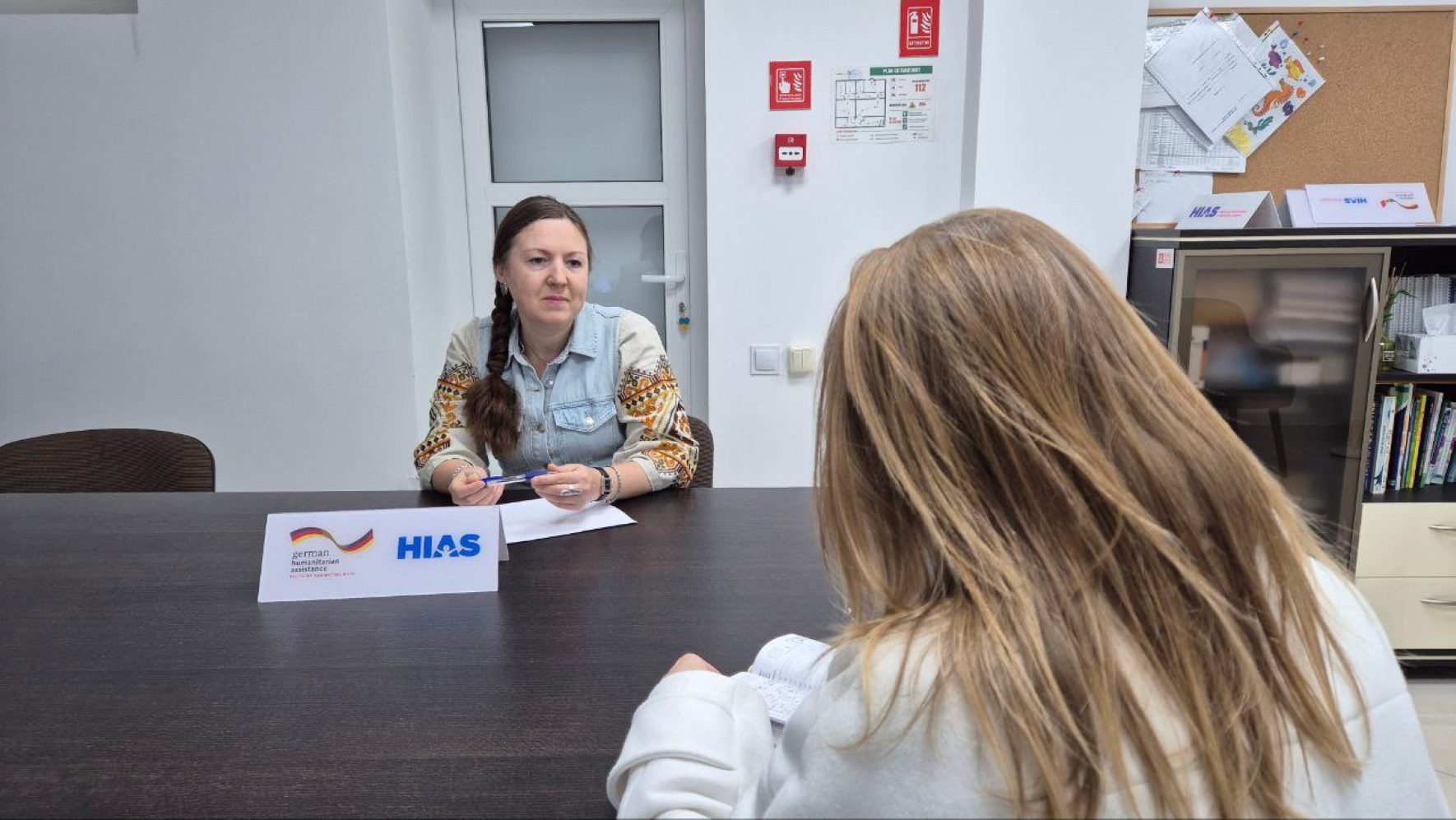
Helping Displaced Ukrainian Women in Moldova Heal and Rebuild
Read MoreSofia
15-year-old Sofia left a training on violence prevention with a new sense of clarity and confidence. The session was led by Power of a Woman (PoW), funded by GFFO and implemented with the support of HIAS, and it opened her eyes to issues she had only partially understood before.
Sofia knew that girls her age often encounter harassment, online abuse, or unhealthy friendships. She also recognized how stereotypes are passed from one generation to the next. She dreams of a world where everyone’s boundaries are respected and where girls grow up knowing they have the same rights and opportunities as boys. In that world, girls can walk away from harmful relationships without shame and choose their own future.
During the training, PoW facilitators explained the different forms of violence and the importance of personal boundaries and consent, both physical and emotional. They also shared practical guidance on how to respond safely and seek help.
Sofia also raised a question about self-worth and how gossip or bullying can make someone doubt their own value. The team’s psychologist offered a simple but powerful demonstration. Holding up a 200‑hryvnia bill, she crumpled it and stepped on it, then asked whether its value had changed.
“No matter what happens to it, its worth remains the same,” the psychologist said.
Sofia later reflected, “I will remember this example for the rest of my life… What matters is knowing who you are and valuing yourself.”
PoW continues to equip young people like Sofia with the tools to recognize, prevent, and challenge violence.
I felt cared for. We are usually ignored, and no one ever asks if we need support. We felt that we are not alone, that someone truly cares about us.Anna*, a Ukrainian from the Roma community helped by HIAS local partner Power of a Woman
Anna*
Anna*, a 40‑year‑old mother of three from the Roma community, has faced many obstacles throughout her life. She had limited opportunities to attend school and cannot read or write.
Before the war, she found seasonal work helping small farmers, but many of these opportunities disappeared as businesses left the region. Without formal education, securing work has become even more difficult. Her family struggles financially and often cannot afford basic necessities.
Power of a Woman (PoW), funded by GFFO and implemented with the support of HIAS, provided Anna with essential supplies and access to trainings on preventing and responding to violence.
“We face violence every day without even realizing it,” said Anna.
The dignity kit she received became more than just a gesture of care; it significantly improved her access to hygiene products and enhanced her living conditions. Through PoW awareness sessions, she also learned about various forms of violence and the steps to take when she or others encounter it.
“I felt cared for. We are usually ignored, and no one ever asks if we need support,” Anna said. “We felt that we are not alone, that someone truly cares about us.”
*Name changed for safety.
Your support matters
Your donation will empower HIAS to provide life-saving humanitarian assistance to refugees and displaced people where and when it’s needed most.