Protecting the safety and rights of refugees is more than just a moral necessity — it’s also a legal obligation. The U.S. and other countries have established these obligations to refugees through a combination of international treaties, domestic laws, and humanitarian principles.
In this edition of HIAS’ Deep Dive series, we explore this legal framework in greater detail.
International Principles
The notion that countries have an obligation to protect refugees has existed for centuries. But it took the unique horrors of World War II and the Holocaust to establish a major international agreement to codify this principle.
The cornerstone of international refugee protection is the 1951 Convention Relating to the Status of Refugees and its 1967 Protocol. The Convention established the first universal definition of a “refugee” and set minimum standards for their treatment, creating a permanent framework for protecting vulnerable populations.
The Convention includes two key principles, non-refoulement which prohibits the return of refugees to a country where they face serious threats to their life or freedom, and the right to seek protection in another country. Refugees are also entitled to access to courts, education, work, and public relief, and the Convention emphasized the need for refugees to be treated without discrimination. The 1967 Protocol expanded the geographical reach of the 1951 Convention beyond those fleeing Europe.
Today, the United Nations High Commissioner for Refugees (UNHCR) is the primary international body responsible for coordinating refugee protection and assistance. HIAS collaborates with UNHCR to advocate for and provide services to refugees abroad. This partnership helps ensure that refugees receive consistent and coordinated support across different regions.
Donate today
Now more than ever, your support is needed to help refugees and displaced people rebuild their lives.
U.S. Refugee Legal Obligations
For decades, the U.S. upheld its legal obligations to refugees and asylum seekers but has since forsaken its duty during the Trump administration. While the rights below are technically still the law, the U.S. government does not follow them and instead actively undermines them.
In the United States., the 1965 Immigration and Nationality Act (INA) is the primary statute governing immigration law, including provisions for asylum and refugee protection. It incorporates the principles of the Refugee Convention and establishes the criteria for granting asylum and refugee status. The subsequent Refugee Act of 1980 amended the INA to align U.S. law with international standards set by the Refugee Convention, establishing the U.S. Refugee Admissions Program (USRAP) and creating a systematic process for admitting refugees into the country. The Act also set up procedures to apply for asylum and allowed refugees in the U.S. to become legal permanent residents or citizens.
Individuals who are physically present in the U.S. have the right to apply for asylum. Asylum seekers can provide testimony or evidence to prove they cannot return to their country of origin because they have a well-founded fear of persecution based on race, religion, nationality, membership in a particular social group, or political opinion.
USRAP allows individuals abroad who are identified as refugees by the UNHCR or other designated organizations to be resettled in the U.S. after undergoing rigorous security and health screenings. HIAS is one of 10 resettlement agencies in the U.S., six of which are faith based, partnering with the federal government to help refugees rebuild their lives in safety in America.
Under these commitments, resettled refugees in the U.S. have the right to work, access public education, and apply for permanent residency after one year. Additionally, they can petition to bring immediate family members to join them in the U.S. These laws reflect the American commitment to upholding humanitarian principles and providing refuge to those fleeing persecution.
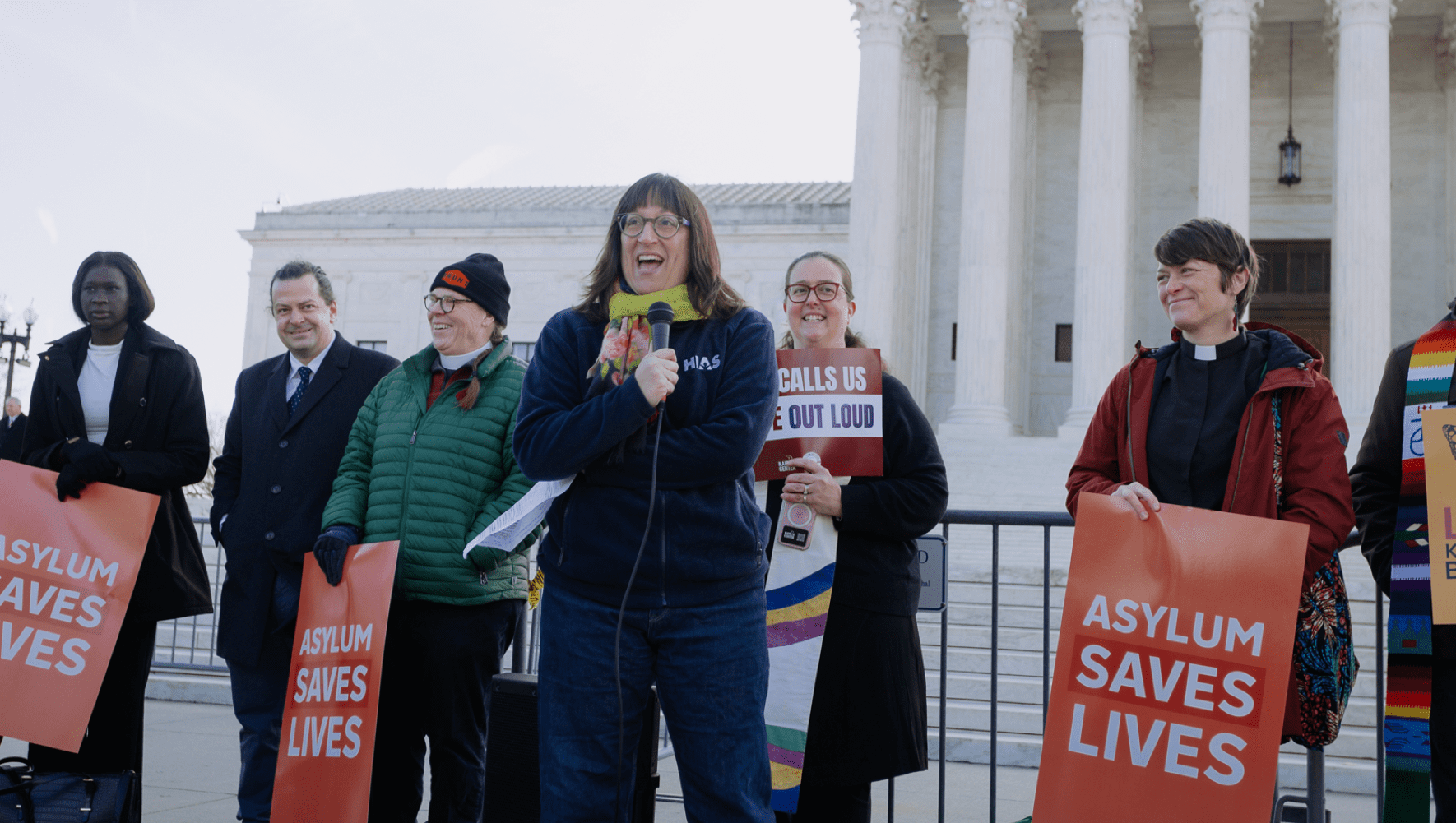
In the past decade, the right to seek asylum and international refugee protections have been repeatedly threatened and weakened. They remain, however, essential and legal pathways to safety in the United States and around the world — and crucial principles to defend. HIAS is fighting to ensure all refugees and asylum seekers are protected under U.S. and international law.
Remembering Who We Are: One Year of Fighting Alongside Refugee and Immigrant Communities
Read MoreThe Trump Administration’s Assault on Refugee Rights
From the outset of President Trump’s second term, his administration has mounted an aggressive assault on the rights and safety of refugees in the United States and around the world. Millions of people have been put into unnecessary danger, and the systems that exist to protect people experiencing violence and persecution have been deliberately dismantled.
Almost immediately after entering office, President Trump suspended USRAP, leaving thousands of refugees stranded. Later, the Trump administration set the lowest refugee ceiling in history and is now revisiting previously approved cases, terrifying thousands of already resettled refugees trying to rebuild their lives in the U.S. These actions were made without any consideration of the legal obligations to refugees or rising global humanitarian needs. HIAS is fighting back, supporting refugees through direct services and advocacy, including a major lawsuit that helped several families safely resettle in the United States.
On top of the attack on refugee rights, the administration has effectively closed the border to asylum seekers, making it nearly impossible for people fleeing violence to seek protection or receive fair hearings, and freezing many previously filed asylum cases within the U.S. These policies have denied vulnerable displaced people access to urgently needed safety and legal support. In response, HIAS expanded our legal and social services, providing assistance to thousands of asylum seekers through staff attorneys and pro bono partners.
Most chillingly, Trump has aggressively implemented a mass deportation program marked by high-profile raids and the removal of people from their homes, workplaces, and public spaces, including third-country deportations to places where individuals face serious danger. These well-funded operations have led to violent and often unlawful removals, terrorizing communities and spreading widespread fear. HIAS has spoken out against these harms, supported affected communities with resources and information, and mobilized Jewish communities nationwide to organize vigils, provide legal accompaniment, and prepare to support neighbors under threat.
The U.S. government may have abandoned refugees, but HIAS will always be there to advocate for the rights of people fleeing violence and persecution. With your support, we will never stop fighting for governments to honor the legal obligations to refugees and asylum seekers.
*Originally published on January 21, 2025. Updated on May 18, 2026.
Donate today
Now more than ever, your support is needed to help refugees and displaced people rebuild their lives.