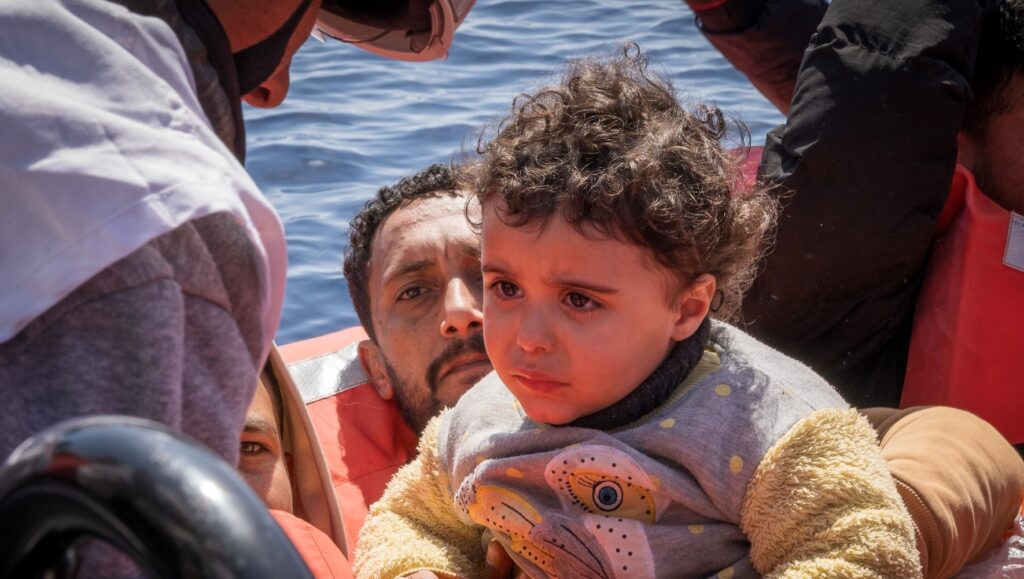
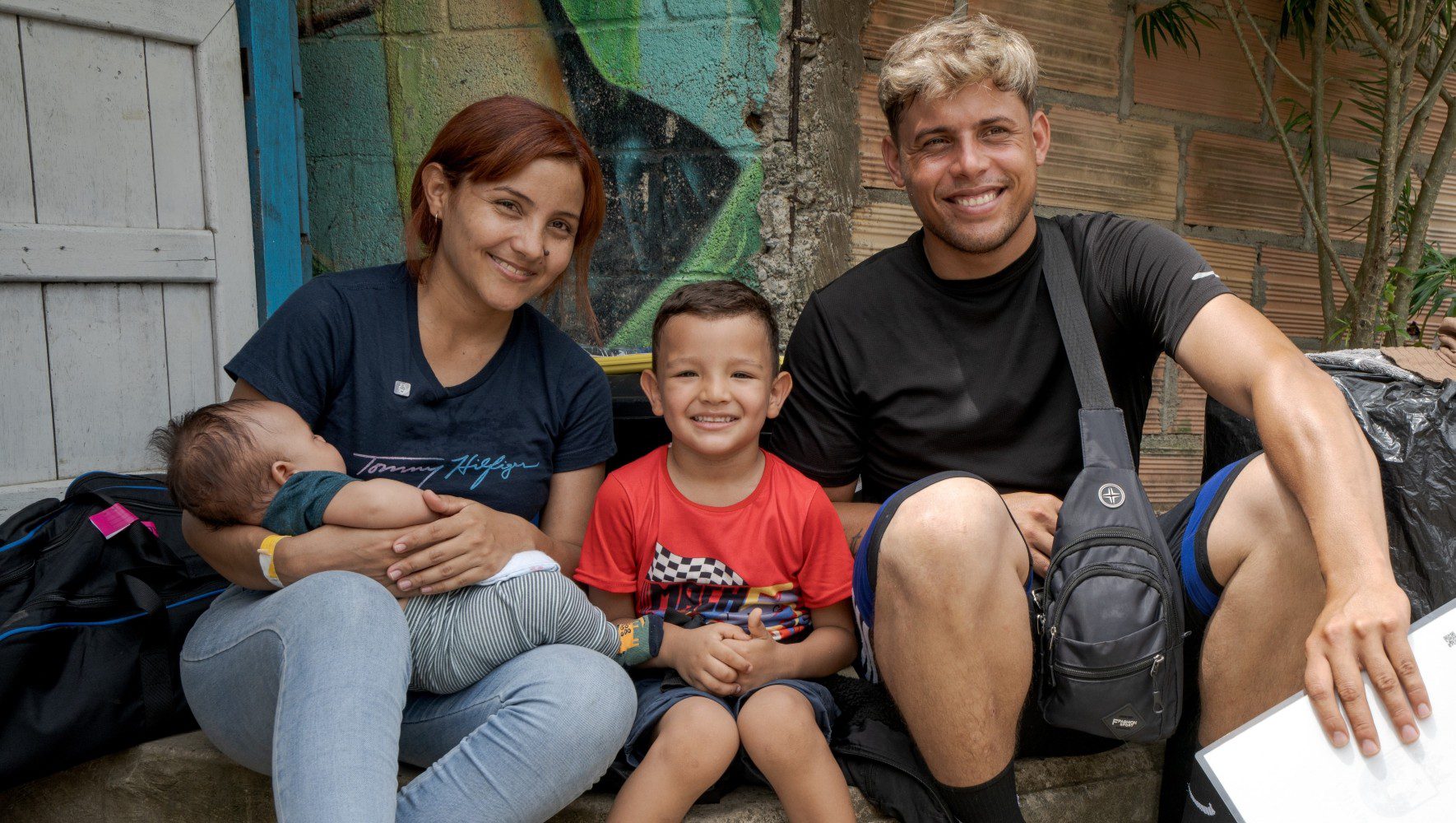
Across Latin America, an underreported but profound shift in migration is under way. After years of moving north, thousands of people are now traveling south, forced into what many describe as a “reverse migration,” away from the United States and back toward countries they once fled. This reversal is not voluntary—it is being driven by increasingly restrictive U.S. policies that have made seeking asylum or other forms of legal entry nearly impossible. Along the routes, HIAS is one of the few organizations still providing consistent support to people on the move.
For many families, the decision to turn back has been wrenching. Tatiana*, a young mother, never imagined she would be retracing her steps. She and her husband left their home country hoping to find safety and stability. When they reached southern Mexico, shifting U.S. policies abruptly halted their journey. Authorities told them they could not continue north and left them in Chiapas. There, Tatiana learned she was pregnant. Her husband could not find work. With no way forward, the family turned back.
Donate today
Now more than ever, your support is needed to help refugees and displaced people rebuild their lives.
They are among tens of thousands of people in similar situations. For years, migration in the Americas largely moved in one direction as people fled violence, persecution, and humanitarian crises. But then, after more than 520,000 people crossed the Darién Gap in 2023, northbound movement through the jungle ground to a near halt in the first half of 2025, with crossings down an estimated 97–98% from earlier peaks. At the same time, southbound movement surged: by mid-2025, governments in Colombia, Panama, and Costa Rica reported more than 14,000 people reversing course, including over 5,000 moving south through Panama and more than 12,000 entering Colombia from Panama.
Today, reverse crossings continue, but HIAS’ teams report that the scale is now fluctuating and no longer approaching the peak levels observed in mid-2025. Though the direction of movement has changed, the danger has not disappeared and the needs of those making the journey remain great. Many families are moving south away from the U.S. through some of the same corridors, often with fewer resources and far less support. Criminal groups continue to control key stretches of the route, demanding payment for passage. People face food shortages, unsafe shelter, lack of clean water, and untreated trauma. For pregnant women, children, and survivors of violence, the risks are especially acute.
These hardships are intensified by the withdrawal of humanitarian aid across the region. Funding cuts have forced many organizations to scale back or leave entirely, even as needs grow. HIAS has also been affected—but our teams remain.
The return is very different. There is less humanitarian aid, and the loneliness is more palpable. When we met with HIAS, I was so grateful that they asked how I was doing and what they could do to help.Tatiana*, a young mother making the reverse journey south
In Colombia, people arrive exhausted, frightened, and uncertain about what comes next. Many are women who are survivors of armed conflict, often with heightened protection concerns and limited access to specialized services. HIAS Colombia teams meet them in safe spaces, offering short but meaningful interventions focused on protection, mental health, and violence prevention. For many, being heard—sometimes for the first time in months—is itself a lifeline.
Tatiana and her family made it to Capurganá, Colombia, where they connected with HIAS’ staff.
“The return is very different. There is less humanitarian aid, and the loneliness is more palpable. When we met with HIAS, I was so grateful that they asked how I was doing and what they could do to help,” she said. They offered help, cool water and food. “This means a lot to us, it is comforting to feel that support along the way. I was extremely grateful for the care they expressed,” she added.
Movement in the south of Colombia has increased, too, with people entering the country from Ecuador, Peru, and Chile. In these regions, HIAS teams are identifying urgent needs — including food, safe shelter, documentation guidance, protection services, and psychosocial support — and are scaling services accordingly.
In Panama, HIAS continues to operate at critical crossing points, offering protection services, emergency cash assistance, and medical referrals.
Recent shipwrecks and the drowning of two people during maritime transfers in Puerto Obaldía, on the Panama–Colombia border, have raised serious concerns. In response, authorities have increased institutional controls and imposed new operational restrictions, slowing movement and reducing predictability for people attempting to continue south. At the same time, a drastic increase in the ferry fare is forcing many families to remain in the area longer while gathering the resources needed to travel, leaving them exposed to heightened protection risks such as overcrowding, exploitation, and limited access to food and safe shelter.
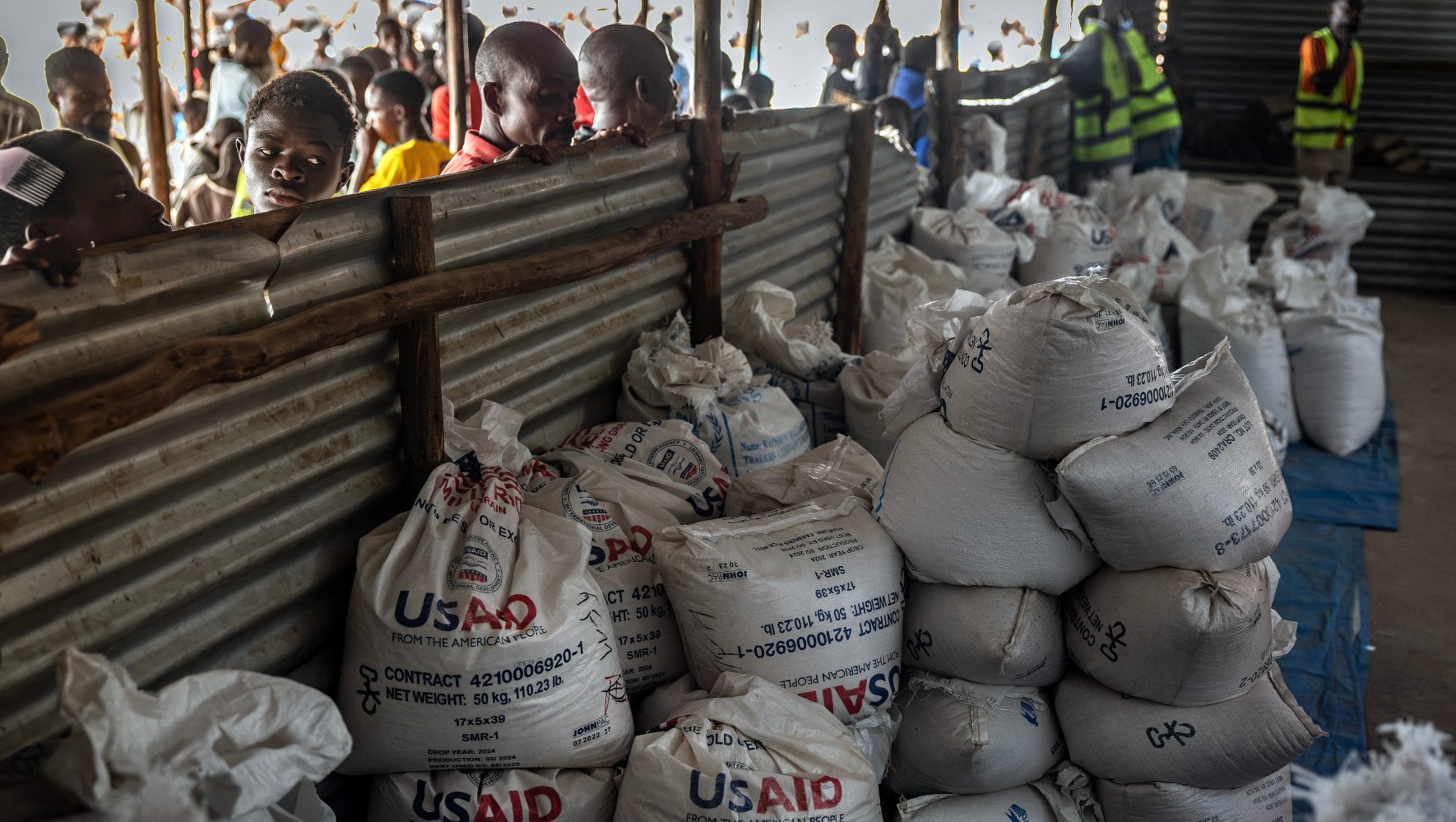
The Trump Administration’s Assault on Humanitarian Aid — What You Need to Know
Read MoreHIAS Panama staff prioritize care for survivors of violence and provide rapid mental health support for people who cannot safely stay in one place for long. Small amounts of financial assistance are provided too, often making an immediate difference, covering food, shelter, or transport for families in crisis.
And in Mexico, HIAS staff report, the situation is increasingly dire. Recent U.S. policy changes, combined with the shrinking availability of asylum and regularization pathways in Mexico, have left many migrants stranded. Prolonged stays without legal status expose families to violence, exploitation, discrimination, and precarious labor. For some, return becomes a last resort—not because it is safe or desired, but because there are no viable alternatives.
Marisol*, a mother of three, spent two years navigating this uncertainty. After fleeing her country, her family waited in Ciudad Juárez, hoping to seek asylum in the U.S. When that pathway closed, they tried to rebuild their lives in Mexico. Detention, prolonged asylum delays, eviction, and a violent assault stripped them of what little stability they had. Returning home, despite the risks, became the only option they could imagine.
Yet even return is too unsafe or otherwise out of reach for many people. Limited assisted return programs, lack of passports, and the high cost of travel leave families trapped. Some are approached by smugglers offering dangerous, irregular routes back south at prices they cannot afford.
As Marisol put it: “I never imagined we would be saving money to pay for a trip back, but we have run out of options.”
The stories unfolding along these routes may no longer dominate headlines. But for the people living them, the crisis is far from over. Resources are thin, and across the region, the gap between need and available support continues to widen.
As migration patterns continue to shift — driven by increasingly restrictive policies that have narrowed protection and closed legal pathways — HIAS remains, adapting our response and standing with people on the move. Even in moments of forced return and profound uncertainty, we work to ensure that dignity, care, and protection are not out of reach.
*Names have been changed to protect identities of those interviewed.
Donate today
Now more than ever, your support is needed to help refugees and displaced people rebuild their lives.