This year for World Mental Health Day, the World Health Organization and other organizations around the world are calling to center the lived experience of people with mental health conditions. At HIAS, our community-based mental health programs center the lived experience of refugees and immigrants and train community leaders to strengthen resiliency among people affected by displacement.
In Chad, where millions of refugees are seeking safety from war and conflict, we work with communities to help displaced people overcome trauma and rebuild their lives. HIAS Chad often first provides immediate humanitarian assistance and then helps refugees build economic skills to provide for themselves. These projects, partially supported by the German Federal Foreign Office (GFFO), strengthen community-based protection networks and improve mental health care for displaced people.
Read on to hear from two Sudanese refugees, Souad and Naima, who are healing through community and economic opportunity in Chad.
Your support matters
Your donation will empower HIAS to provide life-saving humanitarian assistance to refugees and displaced people where and when it’s needed most.
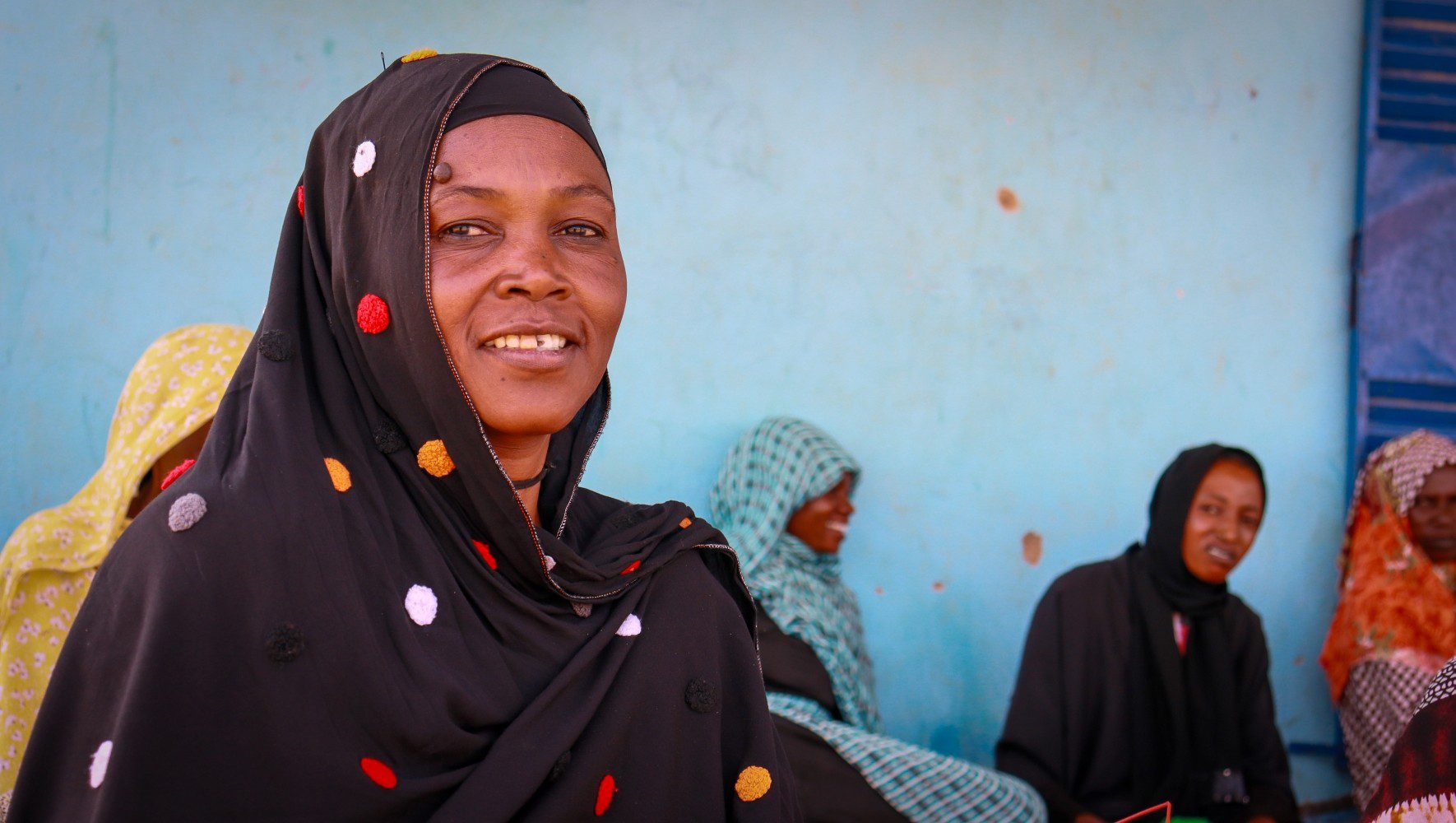
Souad: Finding Peace Through Weaving and Knitting in Community
Before the war broke out in Sudan, Souad led a peaceful life in El Geneina in West Darfur. As a primary school teacher, she divided her time between her job and raising her ten children. Like many parents, she dreamt of seeing her children grow up safely and continue their education. But when the war came to her doorstep, fleeing became the only way to survive.
“I held the youngest ones by the hand while the older ones walked ahead of me,” Souad recalled. “The gunfire was so intense that we had to seek refuge with a stranger to spend the night before continuing on our way. After more than twenty-four hours of walking, we reached the border with our feet completely swollen.”
Upon their arrival in Chad, Souad and her children found some initial comfort thanks to humanitarian aid, but she remained deeply worried. Her husband and her 22-year-old eldest son had stayed behind in Sudan, where men were particularly vulnerable to violence. Fortunately, Souad was able to retrieve her husband and son and bring them to safety in Chad.
Now settled in the Farchana refugee camp in Chad, Souad faced a new reality: hunger, a lack of necessities, and the trauma left behind by the war. It was during this time that she learned about the services offered by HIAS.
“Thanks to HIAS, we received food, clothing, soap, and kitchen utensils,” Souad said. “This aid has allowed us to start living again with a little dignity.”
Beyond the immediate humanitarian assistance, it was the mental health support that had a profound impact on Souad. Since the opening of the Safe Space for Women and Girls in 2025, Souad has regularly participated in the occupational therapy activities organized by HIAS, especially weaving and knitting. The craft became much more than just a hobby. It represents a crucial step in her recovery.
“Today, I make tablecloths, covers, and other handcrafted items that we can use or sell,” Souad said. “When memories of the war come back or I feel anxious, knitting calms me. Here, I also get to spend time with other women. We talk, we support one another, and we no longer face our difficulties alone.”
For Souad, spending time knitting with others has become a place of healing, solidarity, and hope.
“Without HIAS, our lives would be much harder. Thanks to this safe space, we can meet, speak freely, and regain confidence in the future.”
Today, while the wounds of war remain, Souad looks to the future with greater peace of mind. Support that combines humanitarian aid, mental health care, and economic opportunity can restore hope to people uprooted by conflict.
Her message is a call for international solidarity: “Don’t abandon the people of Sudan who are suffering through this war. Without your support, we won’t be able to rebuild our lives.”
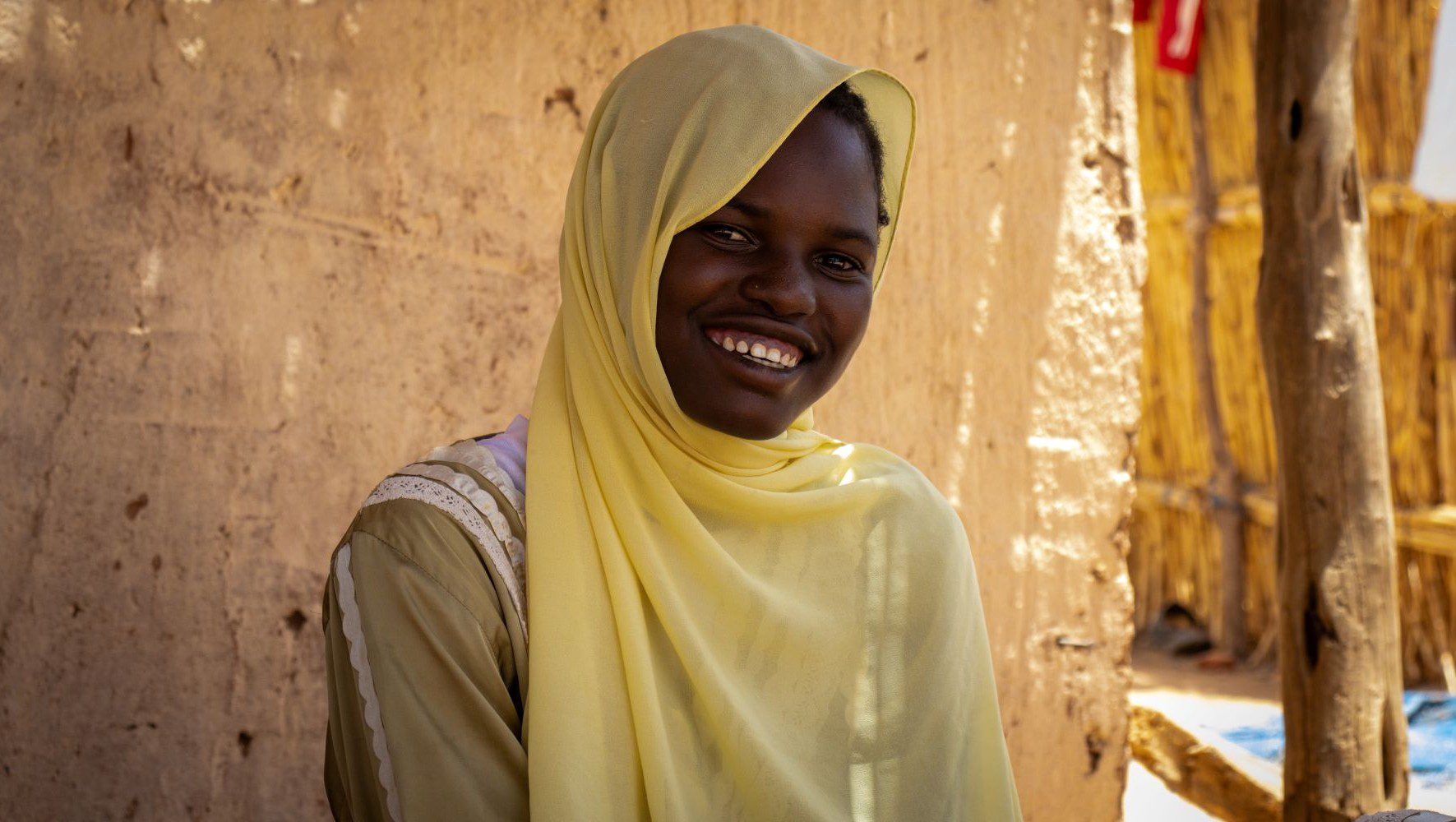
Naima participates in HIAS Chad’s weaving and knitting activities, with the support of GFFO, at the Safe Space for Women and Girls in the Aboutengué refugee camp in June 2026 (Saam Kouakaine for HIAS).
Naima: Building Confidence While Generating Income
At just 17 years old, Naima already carries the weight of war, exile, and resilience. Naima, her parents, and her seven siblings fled the conflict in Sudan in 2023. At first, Naima and her family only wanted to find safety. Arriving in a refugee camp in Chad was a shock. Overnight, Naima and her family found themselves in an unfamiliar environment, without shelter and with very few resources to meet their basic needs.
“The first few hours were very difficult,” Naima recalled. “We had nowhere to sleep and nothing to eat. Then we were welcomed, and the integration process began.”
HIAS Chad immediately helped Naima and her family, providing hot meals, household items, and humanitarian support. But for Naima, emergency assistance was just the first step.
After joining the Safe Space for Women and Girls in the Aboutengué camp, she received sewing training that profoundly changed her daily life. This opportunity allowed her to acquire practical skills and regain confidence in her future. Today, she makes women’s clothing that she sells to women in the camp. The income she generates not only allows her to meet some of her own needs but also to contribute to her family’s expenses.
“This training has helped me a lot in my journey toward self-reliance,” Naima shared. “Thanks to what I’ve learned, I’m now earning money and can help my parents with household expenses.”
Investing in the skills and economic resilience of displaced women and adolescent girls helps them regain their dignity, strengthen their empowerment, and build a more stable future. Naima is grateful for the support she has received and hopes more aid will be provided for other refugees.
“I sincerely thank the donors for everything they do,” Naima said. “I hope that more women and girls will be able to benefit from this support.”
She also hasn’t forgotten those who are still living under bombardment. “To all those who are still suffering the consequences of war, I want to say: stay strong. I understand what you’re going through.”