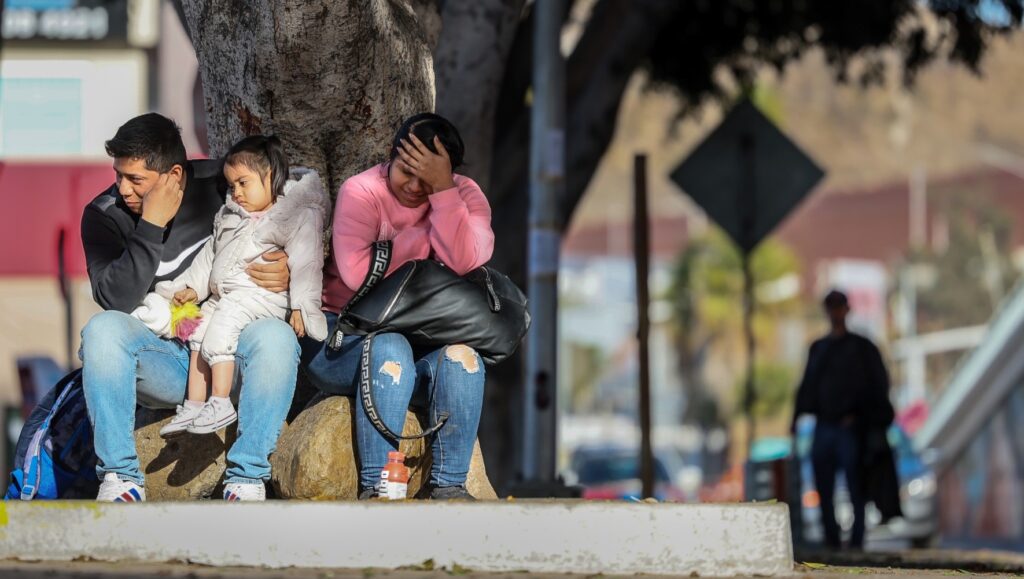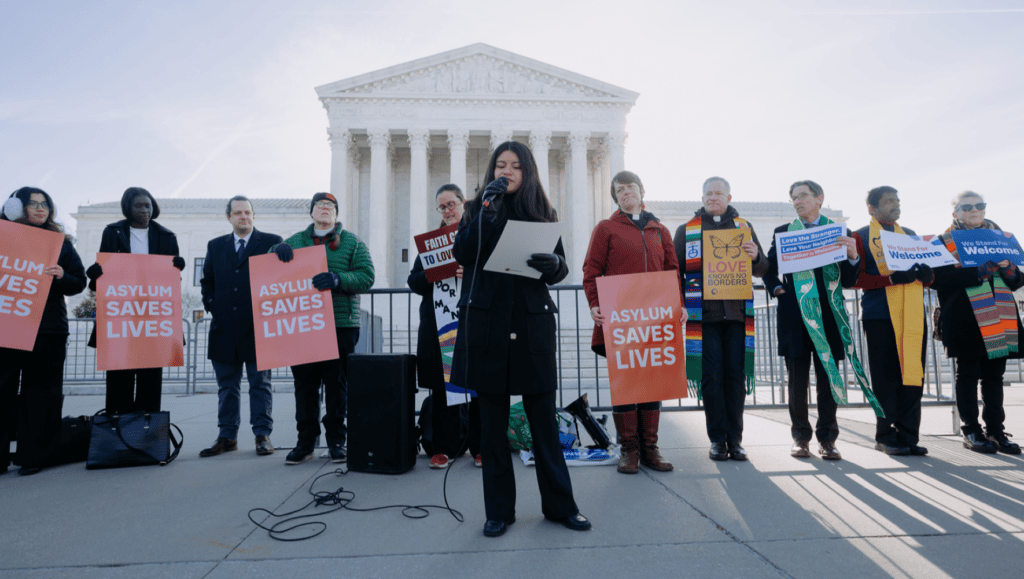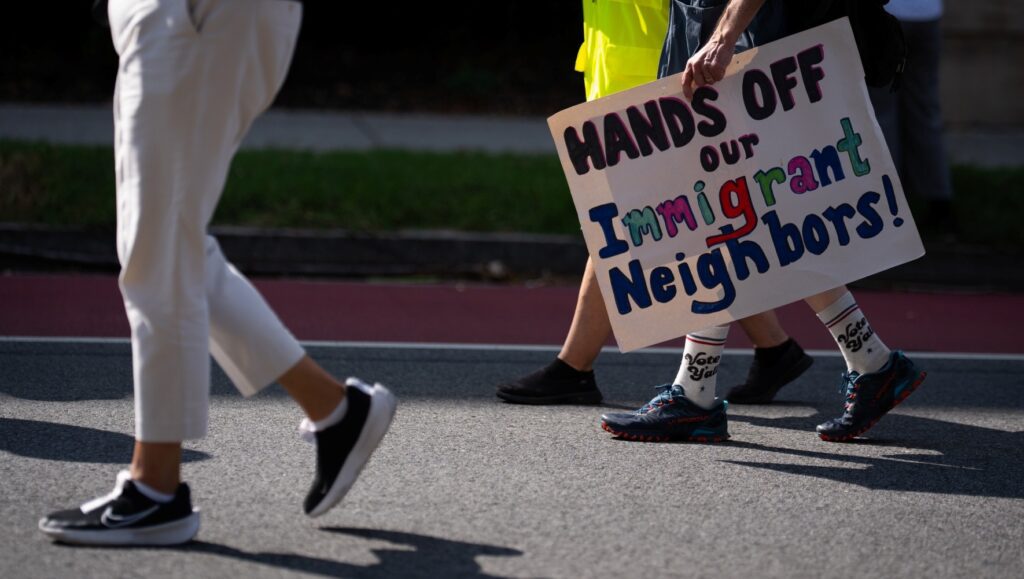

While mass deportations, travel bans, and the halt to refugee resettlement have drawn widespread attention, the Trump administration has also more quietly taken sweeping steps to weaken the U.S. immigration court system—threatening the independence of the courts and the due process rights of people seeking safety in the United States.
As of June 2026, the administration has removed more than 130 immigration judges from their posts and implemented policies that limit access to counsel, fast-tracked sensitive proceedings, and allowed arrests at immigration courthouses. Together, these changes have undermined due process protections for asylum seekers and made it harder for people fleeing persecution to present their cases for protection.
This erosion of the right to seek asylum has endangered thousands of people fleeing persecution and violence. The bottom line is that asylum seekers that would otherwise be granted protection under U.S. law are being denied protection due to political influence form the Trump administration.
How does asylum in immigration courts work, and how have President Trump’s attacks on the courts affected people seeking safety in the United States? Here’s what you need to know.
Give today
As the world's oldest refugee agency, HIAS will always stand for refugees — no matter who is president. And we will do all we can to support our clients, every day, as we have for more than 120 years. Give with confidence to HIAS.
How does asylum in immigration court work?
When the U.S. government believes someone does not have documentation to remain in the country, it initiates what’s known as “removal proceedings,” which immigration courts handle for asylum seekers and other noncitizens. Generally, immigration court is the only venue where a person in removal proceedings can seek asylum.
As of 2026, roughly 700 immigration judges across the U.S., including those assigned to detention facilities, are responsible for adjudicating more than 3 million pending cases. For asylum seekers in removal proceedings, the process begins with filing an application with the court and submitting sufficient evidence of their fear of persecution in their home country. The process concludes with a hearing in which the judge and attorneys from the Department of Homeland Security question asylum seekers about their case. After the hearing, the judge either grants or denies the request for asylum.
The wait between the beginning of the process and the end can be very long: A 2023 study found that the average wait for an asylum case to be completed in immigration court is four years.
How has the Trump administration changed the U.S. immigration court system?
Given the enormous backlog of immigration court cases, a sensible policy response would be to increase the number of judges and courts. Instead, the Trump administration has taken the opposite approach.
So far, at least 130 immigration judges have been removed from office under pressure from the Trump administration. To put this number in perspective, just six judges were removed during President Biden’s four years in office. Those judges who remain, now with an even more daunting number of cases on their dockets, face pressure to decide cases hastily — without the deliberate thought and care that asylum cases deserve. One recently departed judge described this process as an “attack on the rule of law.”
The Trump administration has also limited the amount of time asylum seekers can seek and obtain legal counsel, defunded legal advice and know-your-rights resources in court, established a maximum deadline of six months for judges to expedite asylum decisions, and empowered judges to deny asylum and order removal without providing an asylum seeker an opportunity for a hearing.
Most recently, the Trump administration has issued a new rule that removes the guarantee that asylum applicants will be afforded an interview with an expert asylum officer before their claims are referred to an adversarial immigration court for removal proceedings. HIAS and our partners have filed a lawsuit against the potentially devastating rule restricting access to asylum.
Last summer, ICE caused fear and widespread confusion by arresting people at immigration courts as they appeared for hearings. Recently, the administration has been speeding up hearings with little or no notice and packing courts beyond reasonable capacity, to ensure that neither immigration judges nor the noncitizens appearing before them can meaningfully participate in or conduct the hearing.
In less than two years, the impact of these changes has been significant. By June 2026, asylum denial rates had reached 94%. Asylum seekers have fewer opportunities to seek assistance or counsel in navigating an already complex legal system. Judges with higher caseloads and less time to deliberate are more likely to rush decisions, enabling the administration to turbocharge deportations without sufficient reasoning or cause.
The most concerning consequence is that asylum seekers, absent a meaningful opportunity to present their cases in court, will be subject to deportation to countries where their safety is at risk — including countries where they have never been or have no connection to.
How the Trump Administration Devastated the U.S. Asylum System
Read MoreWhat would improve the U.S. immigration court system?
The challenges facing immigration courts are not inevitable. Policymakers can reduce backlogs while preserving fairness and due process. HIAS advocates for commonsense solutions that uphold the fundamental right to seek asylum, ensure due process, and enhance efficiency in the immigration court system. These are policies that would improve the U.S. immigration court system:
- Pass the Real Courts Rule of Law Act, creating independent immigration courts;
- Invest in staffing of immigration courts;
- Add more trained asylum officers who can decide asylum cases in a less adversarial interview format;
- Expand access to free or low-cost legal representation;
- Restrict ICE presence in or near courthouses;
- Remove the six-month deadline and minimum case quota on judges; and
- Require immigration judges to provide sufficient detail and well-reasoned arguments in their asylum decisions.
“All people, regardless of immigration status or place of birth, are deserving of due process in the United States,” said Vanessa Dojaquez-Torres, director of policy and advocacy at HIAS. “For many, an immigration judge’s decision is life or death. Immigration courts should not be a political tool, but a representation of our values to provide a fair process to those seeking safety.”
Despite the Trump administration’s brutal attacks on U.S. immigration courts, we can fight back and uphold the right to seek asylum. Join us by taking action to support our immigrant neighbors.
Originally published on July 25, 2025. Updated on October 23, 2026.
Give today
As the world's oldest refugee agency, HIAS will always stand for refugees — no matter who is president. And we will do all we can to support our clients, every day, as we have for more than 120 years. Give with confidence to HIAS.