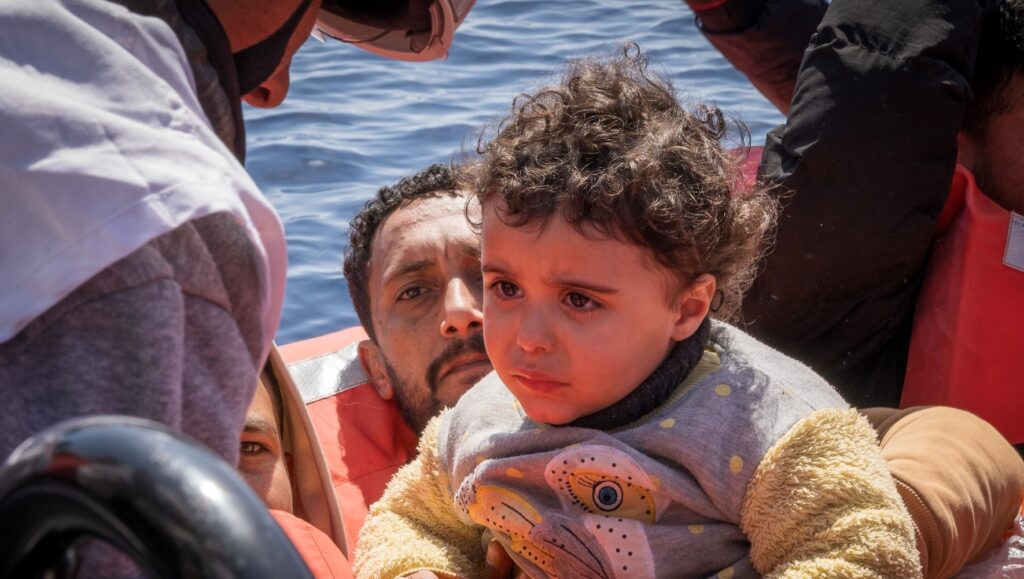
BRUSSELS, BELGIUM, 8 JANUARY 2026 — EU Member States have now adopted the Union Resettlement and Humanitarian Admission Plan (URP) – a welcome step towards anchoring refugee resettlement at the heart of the EU’s new approach to asylum and migration.
Despite this positive development, the newly-adopted plan reveals that the EU will dramatically reduce the number of people who will be resettled over the next two years. EU states have committed to welcome just 10,430 people via resettlement and humanitarian admissions across both 2026 and 2027 – and while all contributions are acknowledged and welcomed – this marks a staggering 83% drop on their pledge of 61,000 people for the years 2024 and 2025.*
Moreover, the EU’s two-year pledge of 10,430 places represents merely 0.4% of the 2.5 million refugees UNHCR estimates will require resettlement in 2026 alone – far below the scale of global needs.
Only nine EU member states have pledged to participate, compared with 14 states who took part in the last pledging cycle in 2024 and 2025, and 17 in 2023. Even for those who made commitments, it’s not a given that these pledges will be fulfilled in practice.
In 2024, Member States collectively resettled just 11,827 refugees, far below their target of 15,000. In 2023, the figure was just 12,467, falling short of the 16,000 pledged, according to UNHCR’s Data Finder.
It’s even more concerning that some EU states have further cut their initial resettlement pledges for 2026-2027, from 15,320 pledges – as proposed by the Commission – to 10,430 pledges, under the pretext that they need to prioritise relocating people from EU countries under ‘migratory pressure’ under the new Solidarity Pool – another key part of the EU Pact, but one which should not lead to weakened resettlement commitments.
Indeed, resettlement is a form of global solidarity and must not be linked to contributions Member States make under the Solidarity Mechanism which relocates people already on EU territory. These two processes serve distinct purposes and should be kept completely separate. Resettlement is a strategic tool. When used ambitiously, it enables the EU to support the world’s largest refugee hosting countries and share responsibility for the protection of refugees facing heightened vulnerability. Safe pathways such as resettlement reduce the desperation that pushes people in need of protection onto dangerous journeys.
The URP’s criteria for who qualifies for resettlement are similarly worrying. It stipulates that resettlement will focus on “countries along the main migratory routes leading to the EU through the Mediterranean and Atlantic routes”, countries in the Americas with “socio-cultural ties that might foster integration”, and countries that the EU or member states have established or are hoping to strike migration deals with.
This narrow approach fails to reflect the reality of global resettlement needs. UNHCR estimates that the top five refugee-hosting countries with the highest resettlement needs in 2026 will be Iran, Türkiye, Pakistan, Ethiopia and Uganda – many of which fall outside of the proposed eligibility criteria.
This so-called integration criterion must not become a leading factor in determining who is offered resettlement, as resettlement is first and foremost a means to offer protection to people with vulnerabilities.
The Resettlement Coalition urges EU Member States to fulfil and exceed their current pledges, ensuring that protection needs remain at the centre of the URP. While the current low pledges fall well short of needs, full and ambitious implementation of the Union Plan could make resettlement more stable and predictable, creating a strong foundation for expanding safe pathways in the years ahead.
The implementation of the URP – which the Coalition has championed over recent years – offers a genuine opportunity to embed safe pathways at the core of the EU’s approach to asylum and migration. However, to realise this potential, EU Member States must significantly increase their commitments in line with global needs and ensure that every pledge is fulfilled. Crucially, these safe routes must complement, not replace, the fundamental right to seek asylum, regardless of people’s country of origin or means of arrival in Europe.
Signatories:
11.11.11.
Caritas Europa
CCME
ECRE
HIAS Europe
ICMC Europe
International Rescue Committee (IRC)
Notes to editors:
* A breakdown of how many people would be welcomed through resettlement and humanitarian admissions can be found on page 5 of the Council Implementing Decision.
The Brussels-based Resettlement Coalition is a group of NGOs and CSOs, advocating for and working together on safe pathways to the EU. The Coalition was involved in the advancement of the Union Resettlement Framework and has worked proactively to encourage Member States to commit to an adequate number of resettlement pledges.