Community sponsorship of refugees is rooted in the simple, powerful idea that ordinary Americans can play a role in welcoming newcomers. In fact, more than 140 years ago, HIAS was founded by the American Jewish immigrant community to support newer Jewish arrivals fleeing violence and persecution in Eastern Europe. Ever since, HIAS and our resettlement partners have been at the forefront of exploring community sponsorship as a model of refugee resettlement in the United States.
“When nearly 80,000 Afghans were evacuated to the U.S. in 2021, our country found itself in an all-hands-on-deck moment to welcome our new neighbors into our communities,” recalled Andrea Gagne, HIAS’ Senior Program Manager for Private Sponsorship. “Everyday Americans in every corner of the country were ready to help. It created the perfect conditions for the rapid growth of community sponsorship.”
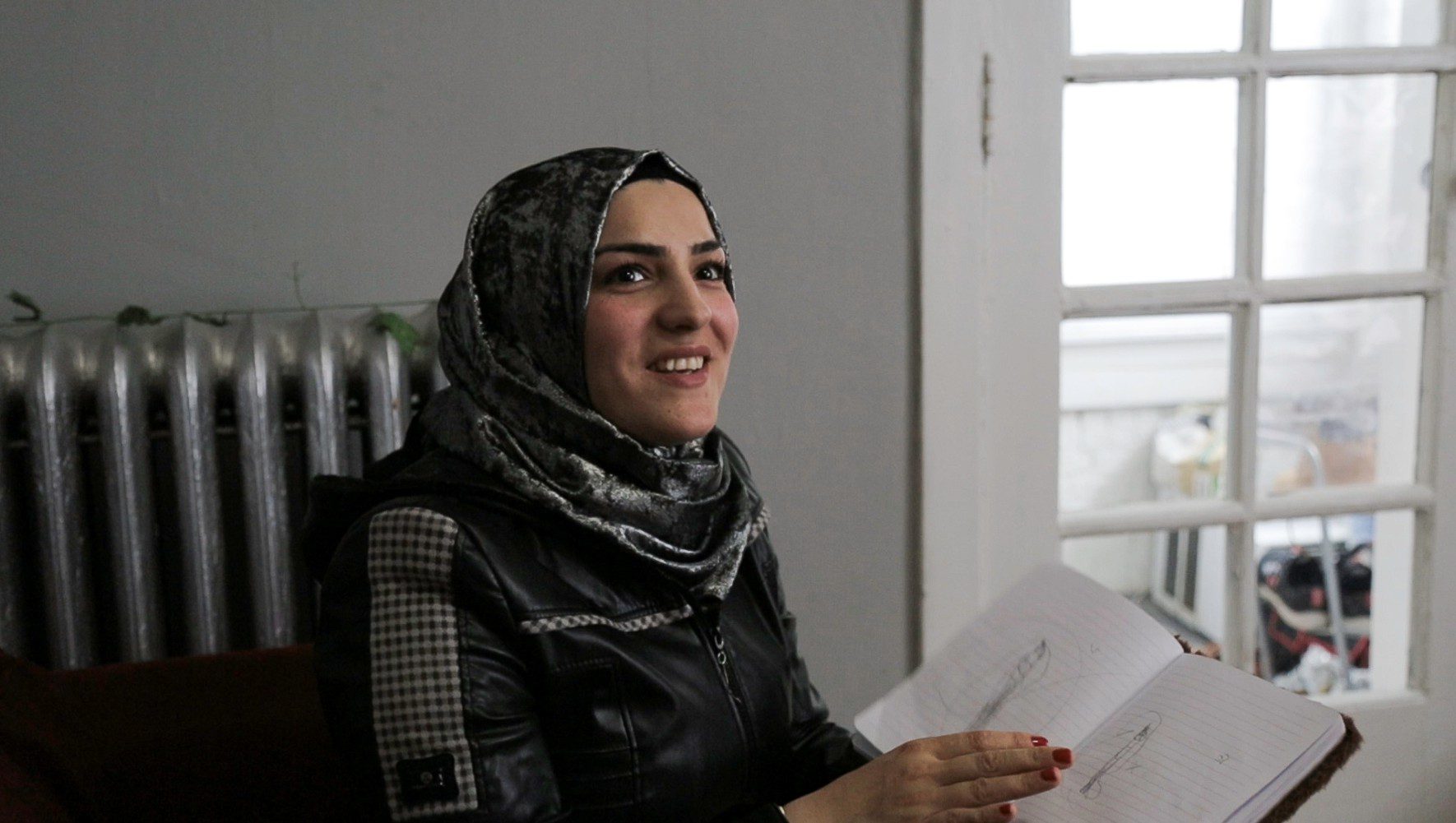
Alaa and Hussam, refugees from Syria, were just beginning their life together as a couple when war forced them to flee their home. They spent over a decade in Turkey, where they welcomed two children and found a way to get by. But as Alaa says, without a permanent resettlement option, “there was no way to stabilize psychologically.” After they were accepted for resettlement to the U.S., they boarded a plane to Chicago and “started over from zero.”
Waiting for them at the airport was a group of volunteers, including Tom. Growing up, Tom heard stories about HIAS from his great-aunt who had worked with the organization in New York. When HIAS resettlement partner JCFS Chicago put out a call for community sponsorship volunteers, he rallied friends and members of his rabbinic seminary.
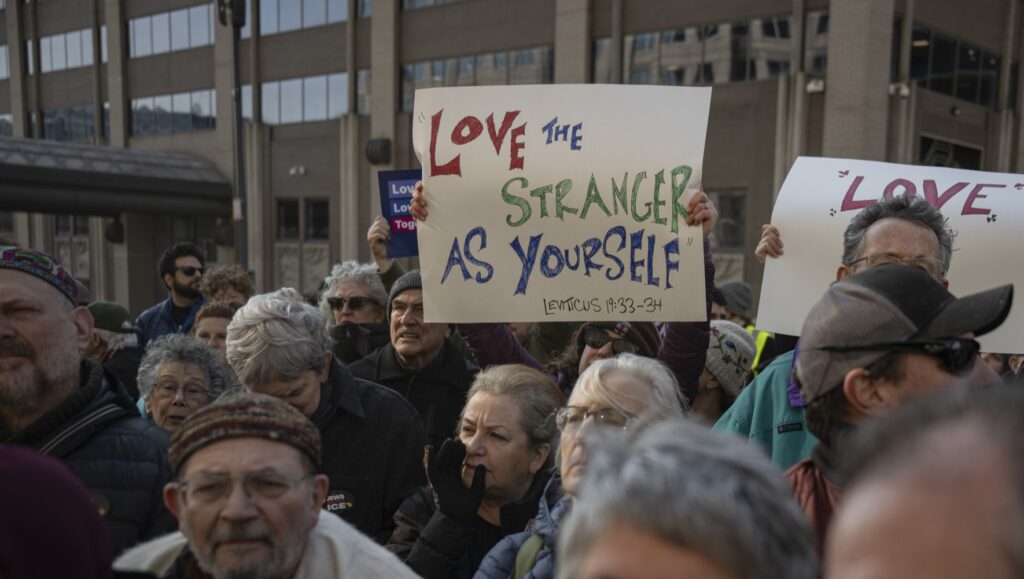
“I was always taught that the most repeated commandment is some version of take care of the stranger,” Tom said. “It’s really trying to do that mitzvah in a very concrete way.”
Donate today
Now more than ever, your support is needed to help refugees and displaced people rebuild their lives.
Between 2021 and 2024, during the Biden administration, community sponsorship saw a major revival. Groups of individuals were paired with refugee families and committed to providing volunteer services, as well as financial or in-kind support.
HIAS and other resettlement agencies recruited, trained, and supervised volunteers. The effort was able to utilize the energy of local communities galvanized by media coverage of immigration restrictions over the preceding four years as well as the evacuation of Afghanistan in the summer of 2021 and the displacement of Ukrainians in the wake of Russia’s 2022 full-scale invasion. With training and oversight from HIAS, volunteers helped refugees with finding housing, signing up for benefits, enrolling children in school, and assisting with employment.
“HIAS’ network of resettlement partners, synagogues, and other community-based groups have fully embraced this model, redefining what resettlement can look like—and what outcomes we can see for newcomers who are often plagued by social isolation and loneliness in their new homes,” said Andrea. “They don’t just have caseworkers, they have friends.”
Tom’s group worked with Hussam and Alaa to navigate life in their new city. They helped the couple open bank accounts, find employment, and help the children enroll in a summer program to set them up for success in the fall. Most of all, the family says, Tom made them feel they were not alone.
“It’s a society I’m dealing with for the first time in terms of work, in terms of finances, and all of that. [Tom] convinced me: ‘I’m with you. Don’t be afraid. There’s nothing to fear’.”, Hussam reflected. “It was material support, logistical support, psychological support, everything.”
Tom described his role as “being a resource, being a listener, being a friend. And providing support where they need it, as opposed to what I think they may need.”
Alaa and Hussam felt that the partnership gave them a jump start. Without the volunteers, they imagine, “it would have taken us longer to adjust, a much longer time.” Beyond this, Hussam says, the experience “got us excited about integrating.”
Seven Ways You Can Take Action for Immigrants
Read MoreCommunity sponsorship helps families bridge critical gaps in their first months. Volunteers can help with material needs as well as add a human touch to highly bureaucratic processes. Volunteers helped refugees get their bearings, both in terms of knowledge and in terms of confidence.
“When you compare families with volunteers and families without volunteers,” Amal, a case manager with JCFS Chicago said, “you feel that families who get volunteers here know the city, the rules, the system faster.”
Omid*, a refugee from Afghanistan resettled in California by JFCS East Bay, also found community with the volunteers who helped him navigate life in the U.S. He had to balance being the head of household for a family of seven with two complex medical cases.
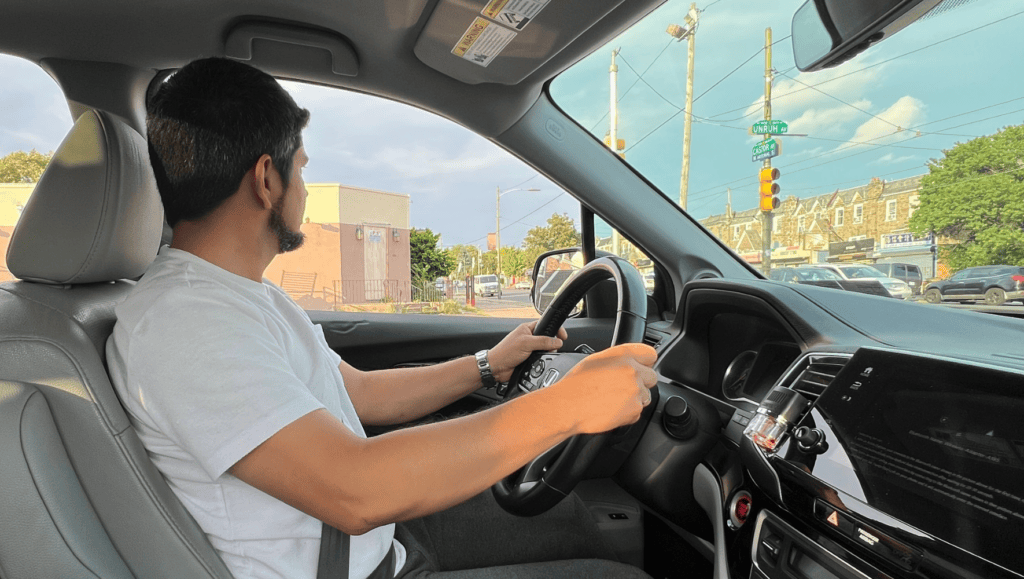
“I didn’t have big expectations,” Omid said, but the volunteers helped with medical appointments, getting his driver’s license, and spent time with one adult family member with cerebral palsy on outings to local parks. Ultimately, he found emotional support he “could not have imagined.”
After Omid and his family were resettled in the United States, his mother was diagnosed with cancer. She had surgery at a hospital more than 50 miles away. Omid expected to be alone with his mom, but instead one of the volunteers showed up to support him through the process.
“I didn’t expect her to come — I told her, ‘It’s a long drive.’ But she came. She was with me in the hospital for six to seven hours,” shared Omid. “It gave me a lot of emotional support. I didn’t feel alone here. I didn’t feel like I am in a foreign country. I felt I am in my own country, that I have someone with me.”
When my children and grandchildren ask, 'what did you do when you saw people in pain and people escaping?' I want to be able to say I took action.Debbie Volunteer with JFS Metrowest in Massachusetts
In 2025, the new Trump administration slashed the refugee program, denying a critical pathway to safety for vulnerable refugees from around the world. However, refugees who arrived before the administration closed the door on welcome are still being supported by HIAS and our resettlement partners across the U.S.
Debbie, a volunteer with JFS Metrowest in Massachusetts reflected that “when my children and grandchildren ask, ‘what did you do when you saw people in pain and people escaping?’ I want to be able to say I took action. It took courage, but I found allies to do it with me. My Jewish values lead me and I believe every life is important.”
Two years after Alaa and Hussam arrived in Chicago, the relationship with Tom has evolved. Today, “we’re just friends,” Tom said, and the family is focused on the future. Alaa is continuing her studies and working as a translator. The kids are excelling in school, and they are saving to buy a house.
The experience has also shaped how they think about their roles in the community. “We hope that there comes a time when we can return the favor — be volunteers,” Hussam said.
To learn more about community sponsorship, read HIAS’ latest report about here, supported by Walder Foundation, and featuring local resettlement partners Commonpoint, Jewish Child and Family Services of Chicago, Jewish Family & Community Services East Bay, and Jewish Family Service of Western Massachusetts.
*Name changed to protect identity.
Donate today
Now more than ever, your support is needed to help refugees and displaced people rebuild their lives.